
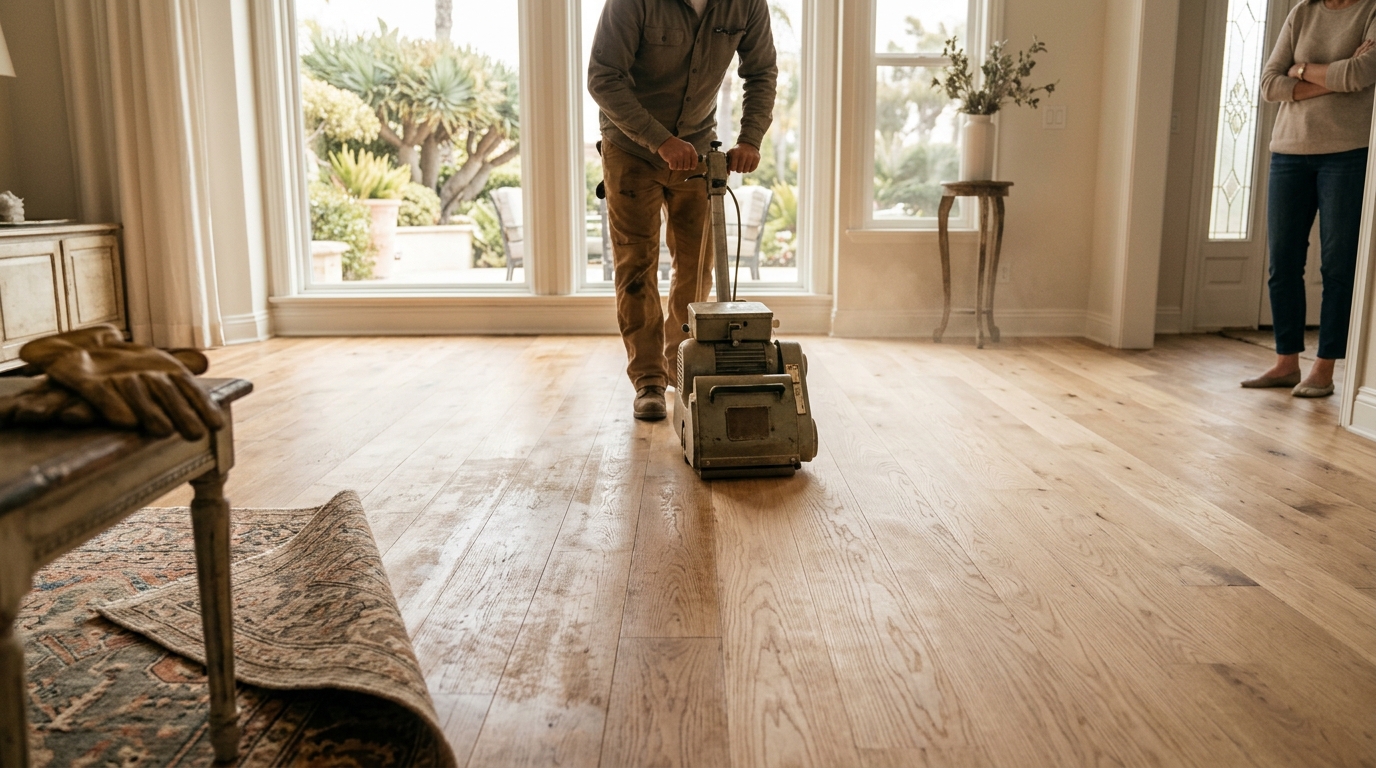
Benefits of Professional Hardwood Flooring Sanding and Refinishing
Hardwood flooring is one of the most enduring investments a homeowner can make, yet it requires consistent maintenance to retain its luster. According to industry data, professional refinishing can extend the lifespan of hardwood floors by decades, effectively doubling or tripling their original utility. This process is not merely cosmetic; it is a structural restoration that protects the wood from moisture, wear, and environmental damage. Homeowners in Orange County and beyond frequently seek these services to combat the specific humidity challenges of coastal climates. (Blog Hardwood Flooring Depot)
Restoration Value and Cost Efficiency
The primary benefit of professional sanding and refinishing is the significant return on investment compared to full replacement. Removing existing floors involves demolition costs, disposal fees, and the purchase of new materials. In contrast, refinishing addresses the surface layer while preserving the structural integrity of the original planks. This approach is particularly valuable for older homes where original hardwood may be difficult to match with modern alternatives.
Professional services ensure that the wood is treated with industry-standard equipment. At Hardwood Flooring Depot, we utilize commercial-grade sanders that remove uneven layers without damaging the subfloor. This level of precision is difficult to achieve with consumer-grade tools. The result is a floor that looks brand new but retains the character and history of the original installation.
Furthermore, refinishing allows homeowners to update the aesthetic of their space without the disruption of a full remodel. Whether you wish to lighten a dark walnut floor or darken a pale oak surface, the sanding process provides a blank canvas. This flexibility ensures that your flooring remains relevant to current design trends for years to come.
Surface Quality and Smoothness
Over time, foot traffic, furniture movement, and pet claws create scratches, dents, and dull spots on hardwood surfaces. These imperfections not only detract from the visual appeal but also create pockets where dirt and grime can accumulate. Professional sanding eliminates these surface defects by grinding down the top layer of wood to reveal fresh, undamaged material.
The term refinishing is defined as the process of sanding down existing wood floors and applying a new protective coating to restore their appearance and durability. This definition highlights the dual nature of the service: mechanical restoration and chemical protection. Without the sanding phase, new finishes would simply seal in the old damage, leading to premature failure of the coating.
Smoothness is critical for the longevity of the finish. If the surface is uneven, the new polyurethane or oil will pool in low spots and wear thin in high spots. Professional sanders are equipped with dust containment systems that ensure a clean working environment. This attention to detail results in a floor that feels smooth underfoot and reflects light evenly, enhancing the overall brightness of the room.
Modern Finish Options and Durability
One of the most significant advantages of professional refinishing is the access to modern finish technologies. Older floors may have been treated with wax or oil-based finishes that require frequent maintenance. Today, high-performance polyurethane and aluminum oxide finishes offer superior resistance to scratches, water, and UV fading.
At Flooring Finishes, we offer a range of options tailored to different lifestyles. For homes with high traffic or pets, a scratch-resistant finish is essential. For those seeking a more natural look, penetrating oils allow the wood grain to remain visible while providing water resistance. The choice of finish impacts not only the look but also the maintenance schedule of the floor.
Additionally, professional applicators ensure even coverage and proper curing times. DIY attempts often result in bubbles, streaks, or tacky surfaces due to improper ventilation or application techniques. Professional services guarantee a uniform, durable coat that can withstand daily wear and tear for many years.
Health Benefits and Allergen Reduction
Hardwood floors are often recommended for allergy sufferers because they do not trap dust, pollen, or pet dander like carpeting does. However, when hardwood floors are worn, dirty, or improperly sealed, they can become a source of indoor air pollution. Dust settles into the cracks and grooves of damaged wood, becoming airborne with every step.
Refinishing restores the protective seal of the floor, creating a barrier that prevents allergens from penetrating the wood. This process significantly improves indoor air quality by eliminating the reservoirs of dust and mold that can grow in damaged or wet wood. According to health guidelines, reducing indoor allergens is a key strategy for managing respiratory conditions.
The term sanding is defined as the mechanical abrasion of the wood surface to remove old finish, stains, and damaged layers, preparing the wood for new treatment. This definition underscores the importance of removing the old, potentially contaminated layers to reveal clean, healthy wood underneath. Professional sanding also includes thorough vacuuming and cleaning, ensuring that no dust remains to be redistributed into the home.
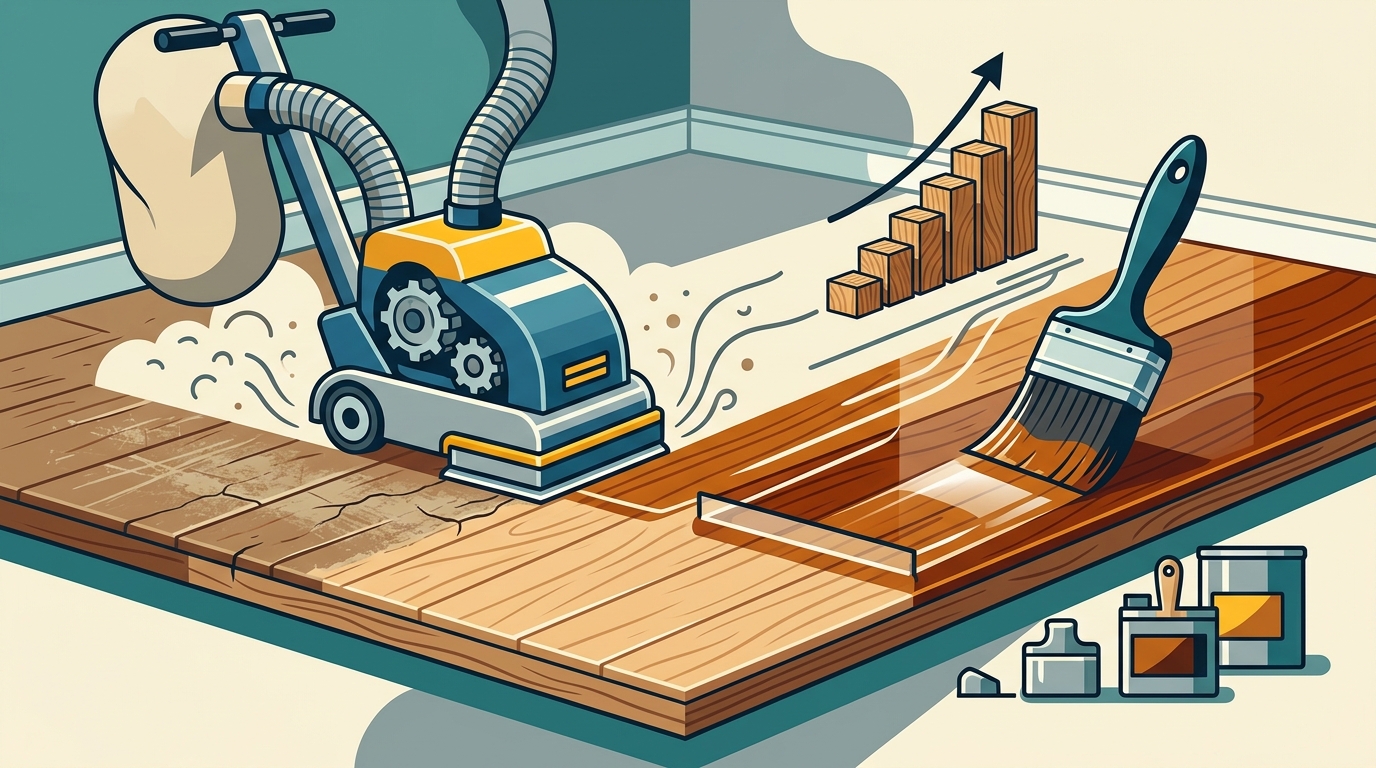
Professional vs. DIY Refinishing
While the idea of refinishing floors yourself may seem cost-effective, the risks and labor involved often outweigh the savings. Professional sanding requires heavy, industrial equipment that is expensive to rent and difficult to operate safely. Improper use of sanders can gouge the wood, damage the subfloor, or create uneven surfaces that are impossible to correct.
| Factor | Professional Service | DIY Approach |
|---|---|---|
| Equipment | Commercial-grade sanders with dust collection | Rental drum or orbital sanders |
| Dust Management | Sealed systems, minimal home contamination | High dust dispersion, extensive cleanup |
| Finish Quality | Uniform, durable, professional-grade coatings | Variable, prone to bubbles and streaks |
| Time Commitment | 2-3 days including curing | 3-5 days of labor plus curing |
| Risk of Damage | Low, insured and experienced | High, potential for gouges and unevenness |
Professional services also include the critical step of edge sanding, which is difficult to achieve with standard rental equipment. Edges are high-traffic areas that often show wear first. By ensuring these areas are sanded and finished uniformly, professionals prevent future peeling and separation of the finish.
Key Takeaways
- Refinishing extends the lifespan of hardwood floors by decades, offering a high return on investment compared to replacement.
- Professional sanding removes surface damage, scratches, and dullness, revealing fresh wood underneath.
- Modern finishes provide superior durability and resistance to scratches, water, and UV light.
- Refinishing improves indoor air quality by sealing allergens and dust that accumulate in damaged wood.
- Professional services use commercial-grade equipment and dust containment systems for a cleaner, safer process.
- Different finish options, such as polyurethane and penetrating oils, cater to specific lifestyle needs.
- DIY refinishing carries significant risks of damage and uneven results, making professional help advisable.
Frequently Asked Questions
How long does the refinishing process take?
The process typically takes two to three days. The first day is dedicated to sanding and cleaning. The second day involves applying the finish, and the third day allows for initial curing. Full curing can take several weeks, during which time furniture should not be replaced.
Can I stay in my home during refinishing?
It is generally recommended to leave the home during the sanding process due to the noise and potential for dust, even with containment systems. The fumes from some finishes may also require ventilation. However, water-based finishes have low odor and may allow for shorter absences.
What is the difference between sanding and screening?
Sanding involves removing the top layer of wood to address deep scratches and damage. Screening, or buffing, is a lighter process that roughens the surface of an existing finish to allow a new coat to adhere. Screening is only suitable for floors in good condition with minor wear.
How often should hardwood floors be refinished?
The frequency depends on foot traffic and wear. High-traffic areas may need refinishing every 7 to 10 years, while lower-traffic areas can go 15 to 20 years or more. Regular maintenance, such as cleaning and using protective pads, can extend the time between refinishing.
What types of wood can be refinished?
Solid hardwood floors can be refinished multiple times. Engineered wood floors can also be refinished, but the number of times depends on the thickness of the top veneer. Thin veneers may only allow for one or two refinishing cycles.
Are there eco-friendly finish options?
Yes, there are low-VOC (Volatile Organic Compounds) and water-based finishes available. These options reduce indoor air pollution and are safer for pets and children. They also dry faster than traditional oil-based finishes.
How do I prepare my home for refinishing?
Remove all furniture and rugs from the rooms to be refinished. If large items cannot be moved, they should be covered with protective sheeting. Ensure that the HVAC system is clean and functioning to help with air quality during the process.
Schedule Your Consultation
Protect your investment and enhance the beauty of your home with professional hardwood flooring sanding and refinishing. At Hardwood Flooring Depot, we provide expert services tailored to your specific needs. Contact us today to schedule a consultation and discover the difference professional care can make.