
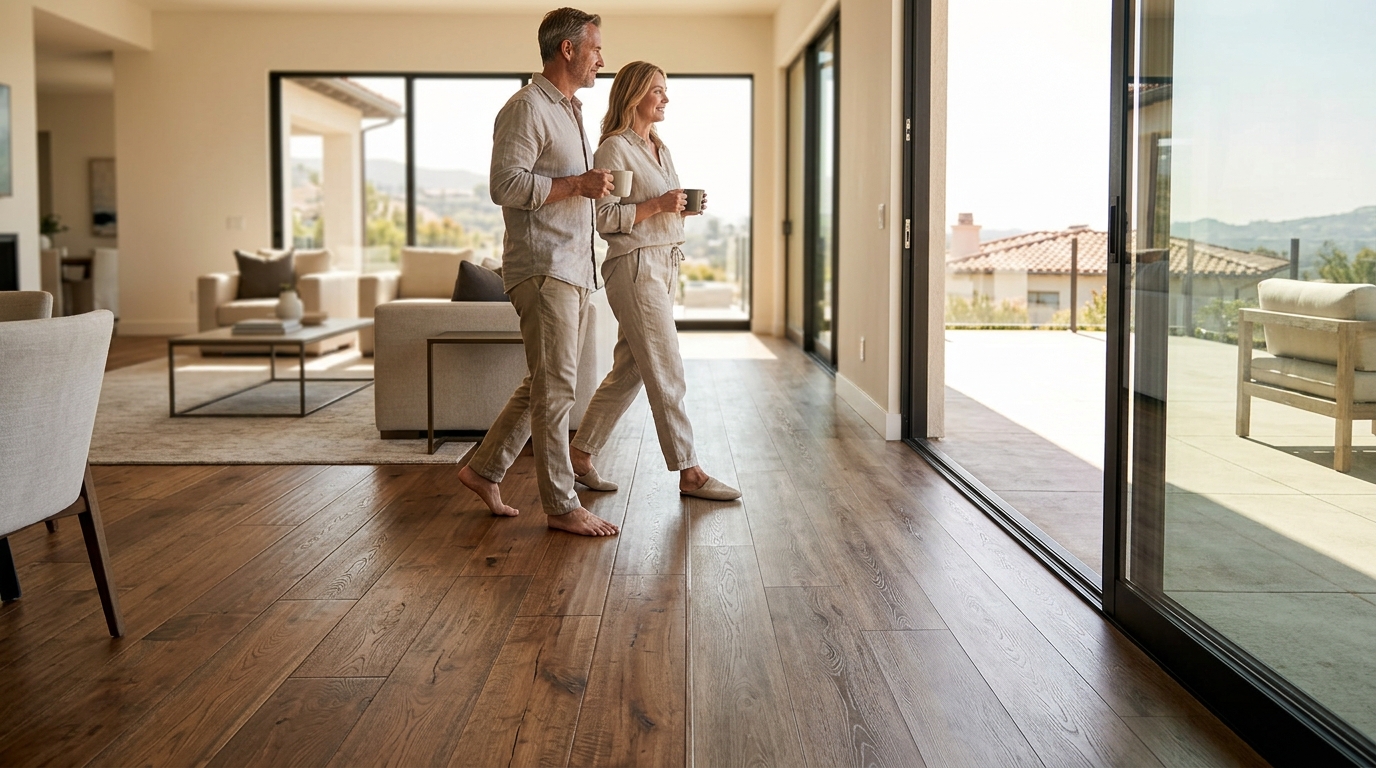
Homeowners in Southern California face unique challenges when selecting flooring due to the region's distinct microclimates, ranging from the humid coastal air of Orange County to the dry heat of inland valleys. According to recent industry data, hardwood flooring remains the top choice for resale value, with real estate experts noting that homes with natural wood floors often sell faster and at a premium compared to those with synthetic alternatives. However, the decision is rarely black and white. It requires a deep understanding of how each material reacts to temperature fluctuations, humidity, and daily wear in a high-traffic household. (Bosa Mediterranean 9 5)
Impact of Southern California Climate
The most critical factor in choosing between laminate and hardwood in this region is environmental stability. Hardwood is a natural material that expands and contracts with changes in humidity. In coastal areas like Irvine or Newport Beach, where moisture levels are higher, solid hardwood can warp if not properly acclimated. Conversely, in inland desert communities, the dry air can cause gaps to form between planks.
Laminate flooring, composed of a high-density fiberboard core, is generally more resistant to humidity changes than solid wood. However, it is not immune to water damage. Environmental Protection Agency guidelines emphasize the importance of indoor air quality, which can be affected by the adhesives used in laminate production. When comparing the two, consider the specific room's exposure to sunlight and moisture. For sunrooms or basements, the stability of engineered options or high-quality laminate often outweighs the traditional appeal of solid wood.
Durability and Maintenance Comparison
Durability is often the deciding factor for families with pets or young children. Laminate is engineered for resilience. Its top layer is a clear wear coat that resists scratches, stains, and fading from UV exposure. This makes it an excellent choice for homes with large windows that let in the intense Southern California sun. According to flooring industry standards, laminate can withstand heavy foot traffic without showing significant wear for decades.
Hardwood, while beautiful, requires more diligent maintenance. It can be scratched by pet claws and dented by heavy furniture. However, hardwood has a unique advantage: it can be refinished. When the surface is worn, you can sand it down and apply a new finish, effectively giving the floor a new life. Laminate cannot be refinished; once the wear layer is compromised, the plank must be replaced. This distinction is vital for long-term planning. If you prefer a "set it and forget it" approach, laminate wins. If you value the ability to restore the floor's original beauty, hardwood is the superior investment.
Cost Breakdown and Installation
Cost is a significant driver in any home renovation project. Generally, laminate flooring is more affordable than hardwood, both in material costs and installation. Laminate often uses a click-lock floating floor system, which allows for quicker installation and lower labor costs. This DIY-friendly nature can further reduce expenses if you choose to install it yourself.
Hardwood installation is more complex and labor-intensive. It typically requires nailing or gluing down the planks, which demands professional expertise to ensure a level and stable surface. The material cost for solid hardwood is also higher due to the raw timber resources required. However, hardwood is often viewed as a long-term investment that increases property value. According to Zillow market analysis, homes with hardwood floors can sell for up to 2.5% more than comparable homes with carpet or laminate. When budgeting, consider not just the upfront cost, but the lifetime value of the flooring choice.
Aesthetic Options and Design
Both laminate and hardwood offer a wide array of aesthetic possibilities. Modern laminate technology has improved dramatically, with high-resolution printing that mimics the grain, knots, and texture of real wood. Some premium laminate options even include embossed textures that feel like wood underfoot. This allows homeowners to achieve the look of exotic species like Brazilian Cherry or European Oak without the premium price tag.
Hardwood offers authentic beauty that laminate cannot fully replicate. The natural variations in grain, color, and texture provide a depth and character that is unique to each plank. Additionally, hardwood can be stained in various colors to match any interior design scheme. For those seeking a specific look, such as the wide-plank European style or the rustic character of reclaimed wood, hardwood provides unparalleled customization. At Hardwood Flooring Depot, we curate a selection of both materials to ensure you have the best options for your specific design vision.
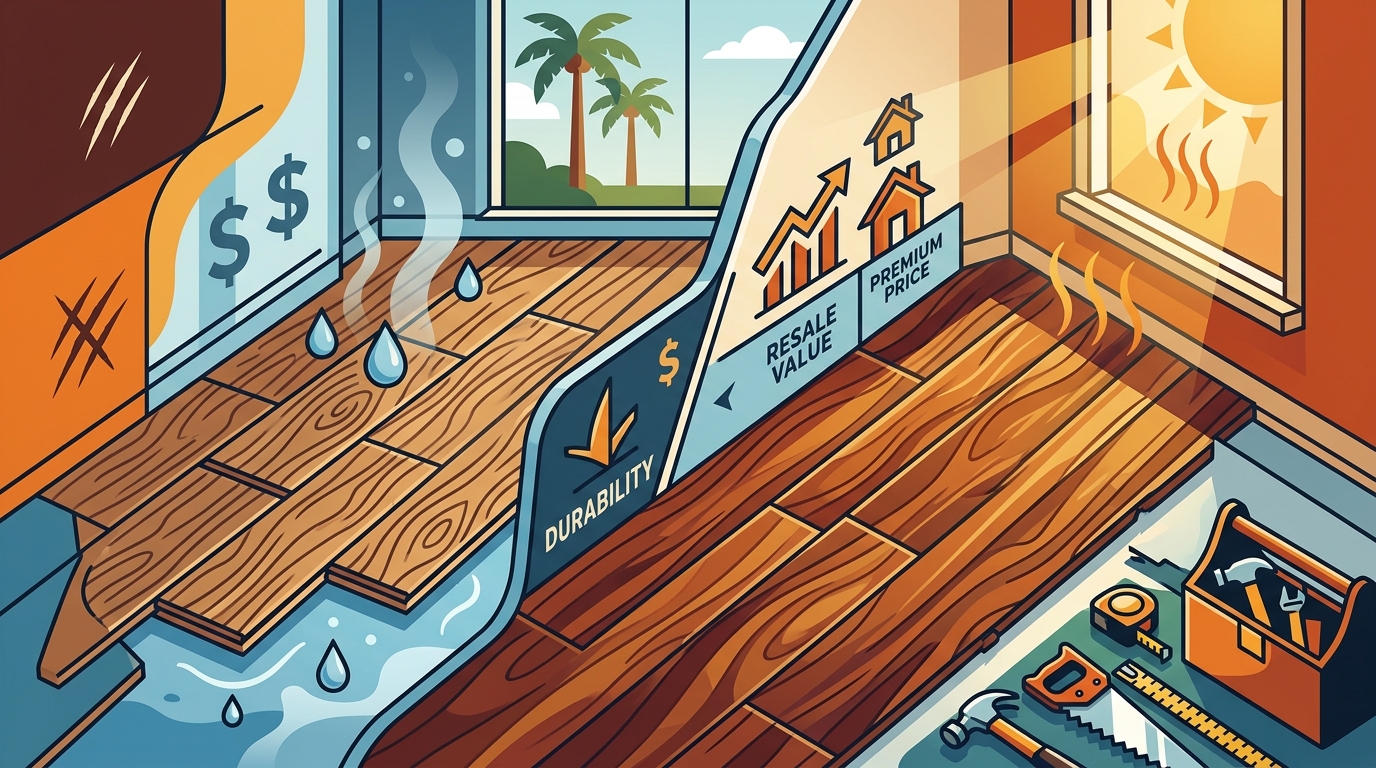
Detailed Feature Comparison
The following table summarizes the key differences between laminate and hardwood flooring to help you make an informed decision.
| Feature | Laminate Flooring | Hardwood Flooring |
|---|---|---|
| Material Composition | High-density fiberboard core with photographic layer | Solid or engineered natural wood planks |
| Durability | High resistance to scratches and stains | Prone to scratches but can be refinished |
| Moisture Resistance | Good, but vulnerable to water damage | Varies by species; solid wood is sensitive to humidity |
| Installation | Often click-lock, DIY-friendly | Requires professional nailing or gluing |
| Lifespan | 15-30 years | 30-100+ years with proper care |
| Resale Value Impact | Neutral to slightly positive | Significant positive impact on home value |
Key Takeaways
- Climate Suitability: Laminate offers better stability in fluctuating humidity, while hardwood requires acclimation in Southern California's diverse microclimates.
- Long-Term Value: Hardwood flooring typically provides a higher return on investment and increases property resale value more significantly than laminate.
- Maintenance: Laminate is low-maintenance and scratch-resistant, whereas hardwood requires periodic refinishing to maintain its appearance.
- Aesthetic Authenticity: Hardwood offers natural grain variations and depth that laminate, despite advanced printing, cannot fully replicate.
- Installation Costs: Laminate is generally cheaper to install due to floating floor systems, while hardwood requires professional labor for nailing or gluing.
- Brand Expertise: Hardwood Flooring Depot specializes in guiding homeowners through these complex decisions with expert advice and premium product selections.
Frequently Asked Questions
Is laminate flooring better than hardwood for pets?
Laminate is often considered better for pets because its wear layer is highly resistant to scratches and stains from claws and accidents. Hardwood can be scratched by pet nails, though it can be refinished later.
Can I install laminate flooring over existing tile?
Yes, laminate can be installed over existing tile as long as the surface is clean, level, and dry. A moisture barrier is often recommended to protect the laminate core from any residual dampness.
Which flooring is more environmentally friendly?
Hardwood is generally considered more eco-friendly because it is a natural, biodegradable material. However, engineered hardwood and sustainably sourced options are also green choices. Laminate uses recycled materials but is not biodegradable.
How long does hardwood flooring last?
Solid hardwood flooring can last 30 to 100 years or more with proper maintenance and refinishing. Engineered hardwood typically lasts 20 to 30 years, depending on the thickness of the top veneer.
Is laminate flooring waterproof?
Standard laminate is not waterproof and can swell if exposed to standing water. However, waterproof laminate options are available that use a waterproof core to resist moisture damage.
What is the average cost difference between laminate and hardwood?
Laminate typically costs between $2 and $5 per square foot for materials, while hardwood can range from $5 to $15 or more per square foot, depending on the species and grade.
Do I need to acclimate hardwood before installation?
Yes, hardwood must be acclimated to the home's temperature and humidity levels for several days before installation to prevent warping or gapping after the floor is laid.
Schedule Your Consultation
Choosing between laminate and hardwood is a significant decision that affects the comfort, value, and aesthetic of your home. At Hardwood Flooring Depot, we provide expert guidance to help you navigate these options. Visit our showroom in Irvine to see samples of our premium hardwood and laminate collections. Contact us today to schedule a consultation and start your flooring project with confidence.