
Can I Install Tile Flooring Myself, or Do I Need a Professional in Southern California?
Home improvement projects in Southern California often begin with a simple question about feasibility. According to recent industry data, approximately 30% of homeowners attempt major flooring installations themselves, yet nearly 40% of those projects result in costly corrections due to improper substrate preparation. This statistic highlights a critical reality for residents in Irvine, Newport Beach, and surrounding OC communities. While the allure of saving labor costs is strong, tile installation demands precision that often exceeds DIY capabilities. Understanding the specific challenges of local climate and building codes is essential before picking up a trowel.
Assessing Your Skill Level and Project Scope
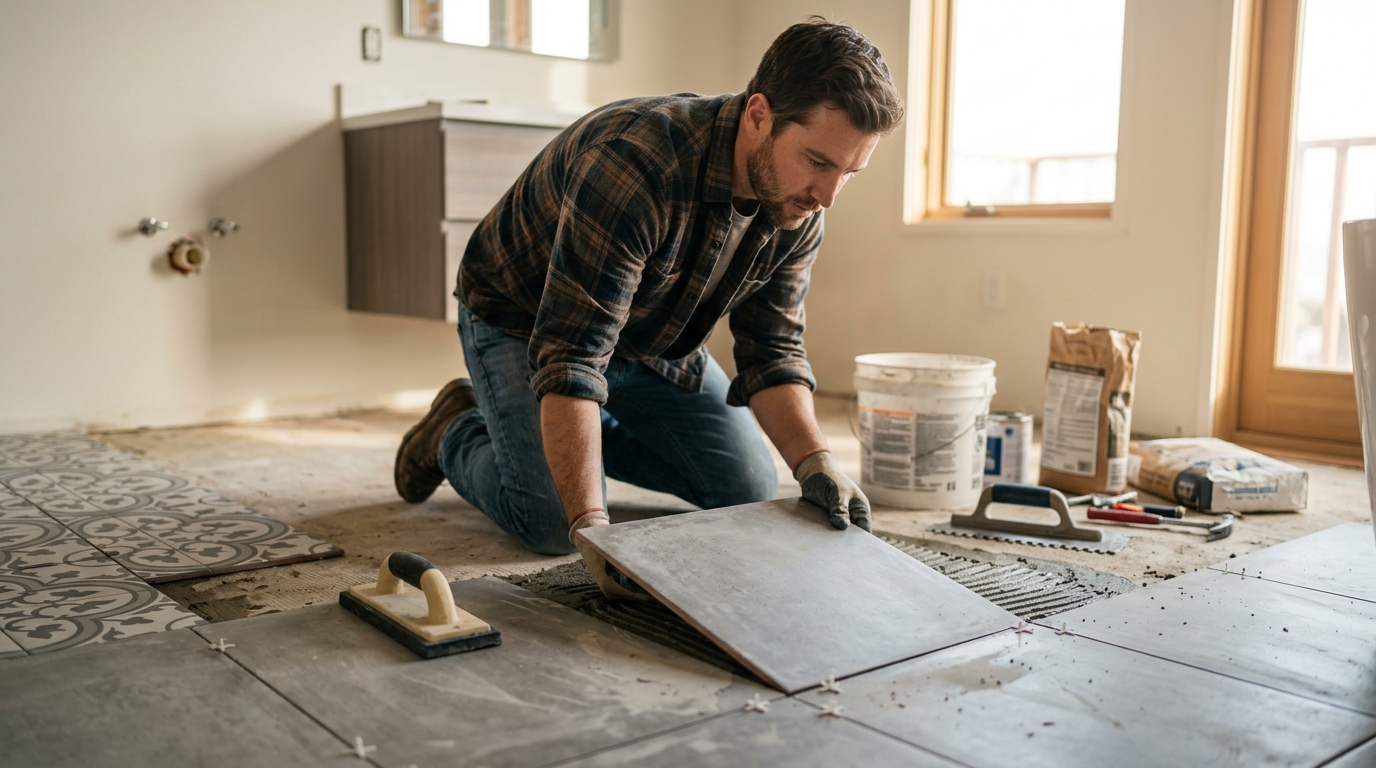
Tile installation is not merely about placing squares on a floor. It is a structural process that involves moisture management, load distribution, and aesthetic alignment. Porcelain is a type of ceramic tile fired at higher temperatures, making it denser and more durable but also significantly harder to cut. If you are working with natural stone, the complexity increases due to the need for sealing and careful handling to prevent cracking.
For small, straightforward areas like a bathroom backsplash, a confident DIYer might succeed. However, large-format tiles or complex patterns like herringbone require a level of expertise that most amateurs lack. The margin for error is slim. A single uneven spot can cause lippage, where tiles sit at different heights, creating a tripping hazard and an unprofessional look. Before starting, honestly evaluate your experience with leveling systems, mortar mixing, and grout application.
The True Cost of DIY vs. Professional Installation
Many homeowners calculate savings by comparing material costs alone. This approach ignores the hidden expenses of tool rental, potential material waste, and the value of your time. Professional installers in Orange County benefit from bulk purchasing power and established relationships with suppliers like those found at Hardwood Flooring Depot. They can often source high-quality materials at prices that rival retail markups.
Furthermore, consider the risk of failure. If a DIY installation fails within a few years due to improper adhesion or water damage, the cost of removal and reinstallation will far exceed the initial labor savings. Professional work comes with warranties and guarantees that provide long-term peace of mind. For a detailed look at available materials, you can explore flooring accessories and adhesives that ensure proper bonding.
Southern California Climate and Substrate Challenges
The unique environmental conditions of Southern California play a pivotal role in flooring longevity. The region experiences significant temperature fluctuations and low humidity levels in many inland areas. Expansion joints are necessary gaps left between tiles to allow for natural movement caused by thermal changes. Without these joints, tiles can buckle or pop off the substrate.
Additionally, many homes in OC are built on slab foundations. Moisture vapor transmission from the concrete slab can weaken the bond of thin-set mortar over time. Professionals use moisture testing kits and vapor barriers to mitigate this risk. Ignoring this step can lead to grout discoloration and tile delamination. Local building codes in cities like Irvine often require specific moisture mitigation standards for residential renovations.
Essential Tools and Technical Requirements
Successful tile installation requires a specialized toolkit that goes beyond a standard home improvement kit. You will need a wet saw capable of cutting porcelain or stone, a laser level for precision, and a variety of trowels for different mortar thicknesses. Renting these tools adds up quickly, and mastering their use takes practice.
Proper mortar selection is equally critical. The type of thin-set mortar must match the tile material and the substrate. For example, installing large-format porcelain requires a polymer-modified mortar to prevent sagging. Using the wrong adhesive is a common DIY mistake that leads to immediate or delayed failure. For expert advice on material compatibility, consult with specialists at premium flooring collections to understand material behaviors.
Comparing Outcomes: Durability and Aesthetics
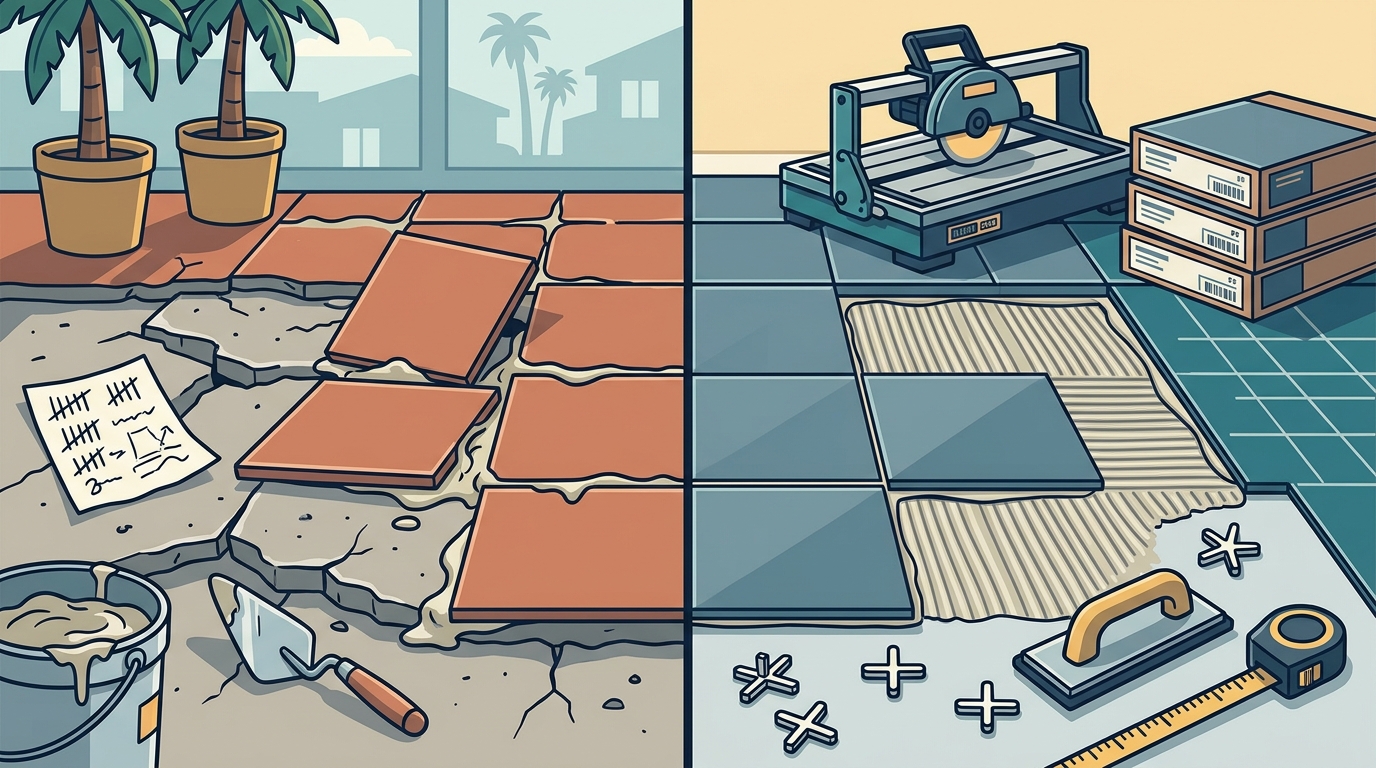
The final result of a tile installation is a reflection of the installer's skill. Professional installers ensure consistent grout lines, precise cuts around obstacles like cabinets and pipes, and a flat, level surface. DIY projects often suffer from uneven grout lines and visible lippage, which detracts from the home's value.
Moreover, professional installation ensures that the flooring meets industry standards for durability. Properly installed tile can last decades, while a poorly executed DIY job may require repairs within a few years. For those considering luxury vinyl or other alternatives, understanding the installation requirements is key. You can review waterproof luxury vinyl options to see if a more DIY-friendly material suits your needs.
Key Takeaways
- DIY tile installation carries a high risk of failure due to substrate and moisture challenges.
- Professional installers in OC have access to bulk pricing and specialized tools.
- Southern California's climate requires specific expansion joints and moisture barriers.
- Large-format tiles demand advanced leveling skills and polymer-modified mortar.
- Proper installation extends the lifespan of flooring, protecting your investment.
- Local building codes in Irvine and Newport Beach often mandate moisture testing.
- Consulting with experts at Hardwood Flooring Depot can clarify material needs.
Frequently Asked Questions
Is it cheaper to install tile myself?
While you save on labor, the cost of tools, materials, and potential errors often makes DIY more expensive in the long run. Professional installers offer efficiency and warranty protection.
Can I install tile over existing flooring?
It is generally not recommended to install tile over existing flooring unless it is perfectly flat and secure. Adding another layer increases height and can cause issues with doors and appliances.
What is the best tile for Southern California homes?
Porcelain and natural stone are popular choices due to their durability and resistance to the local climate. Proper sealing and expansion joints are critical for longevity.
How long does professional tile installation take?
A typical residential project takes three to five days, including curing time for the mortar. Rushing the process can compromise the bond and lead to future failures.
Do I need a permit for tile installation?
Most cosmetic tile installations do not require permits. However, if you are altering plumbing or electrical lines during the renovation, permits may be necessary.
Ready to Transform Your Home?
Whether you choose to tackle this project yourself or hire a professional, having the right materials is the first step. Visit Hardwood Flooring Depot in Irvine to explore our extensive collection of flooring solutions. Our experts can help you select the perfect materials and provide guidance on installation best practices for your Southern California home.