
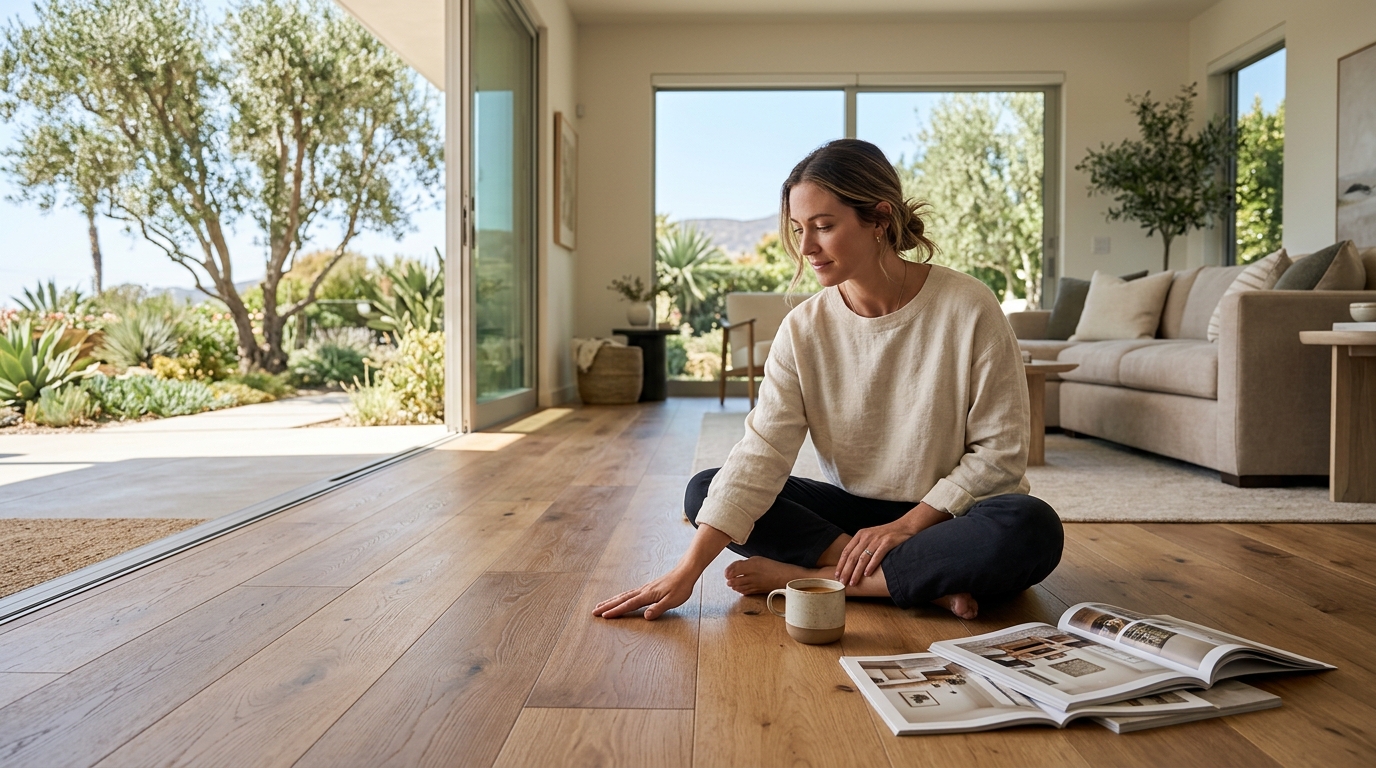
Homeowners in Southern California face unique challenges when selecting flooring due to the region's distinct climate and architectural styles. According to recent industry data, hardwood flooring remains the top choice for resale value in the Orange County real estate market, with buyers willing to pay a premium for authentic wood surfaces. However, the rising cost of materials and installation has pushed many homeowners toward durable alternatives like laminate. Understanding the fundamental differences between these two options is critical for making a financially sound decision that withstands the local environment. (Alassio Mediterranean 9 5)
Defining Core Differences
Before diving into the specifics, it is essential to establish clear definitions for both materials. Hardwood flooring is a solid piece of timber milled directly from a tree log, offering a natural grain pattern and the ability to be refinished multiple times over its lifespan. Laminate flooring is a synthetic product composed of multiple layers, including a high-resolution photographic image of wood grain fused to a dense fiberboard core, topped with a protective wear layer. (Cordon BX13929 36 HFD)
The primary distinction lies in the material composition. Hardwood provides an authentic tactile experience and can be sanded down to remove scratches. Laminate offers a printed surface that cannot be refinished; once the top layer is damaged, the plank must be replaced. This fundamental difference dictates the long-term value proposition for every homeowner in Irvine, Newport Beach, and surrounding communities.
Durability and Climate Impact
Southern California's dry climate and seasonal temperature fluctuations significantly impact flooring performance. Hardwood is a natural material that expands and contracts with humidity changes. In coastal areas with high moisture, solid hardwood can warp if not properly acclimated. However, engineered hardwood options provide greater stability in these environments.
Laminate flooring is generally more resistant to moisture damage than solid hardwood, thanks to its dense fiberboard core and protective top coat. According to building science reports, laminate performs better in areas with rapid humidity shifts, such as homes with large glass windows or patio doors common in modern OC architecture. This makes laminate a practical choice for sunrooms or ground-level installations where moisture intrusion is a concern.
Scratch resistance is another critical factor. Laminate typically features a high aluminum oxide wear layer that resists scratches from pets and foot traffic better than unfinished or lightly finished hardwood. For busy households in Irvine, this durability often tips the scale toward laminate, despite the loss of authentic wood texture.
Installation and Cost Analysis
Cost is often the deciding factor for homeowners. Hardwood installation is labor-intensive and requires skilled craftsmen. The material cost for premium species like oak or walnut is significantly higher than laminate. Additionally, hardwood installation often involves nailing or gluing down planks, which adds to the time and expense.
Laminate flooring utilizes a floating floor system with click-lock mechanisms. This allows for faster installation and lower labor costs. Homeowners can often complete laminate installation in a fraction of the time required for hardwood. The total cost difference can be substantial, with laminate often costing 50% to 70% less than solid hardwood when including materials and professional installation.
| Feature | Hardwood Flooring | Laminate Flooring |
|---|---|---|
| Material Composition | Solid timber or engineered planks | Fiberboard core with photographic layer |
| Refinishing Capability | Yes, multiple times | No, surface cannot be refinished |
| Moisture Resistance | Low to Moderate | Moderate to High |
| Installation Method | Nail-down or glue-down | Floating click-lock system |
| Long-Term Value | High, adds to home equity | Moderate, primarily aesthetic |
Aesthetic Considerations
Visual appeal is subjective, but authenticity matters to many homeowners. Hardwood offers a depth of grain and color variation that laminate struggles to replicate perfectly. Even high-definition laminate prints can lack the subtle imperfections and tactile depth of real wood. For homes with traditional or craftsman architectural styles, hardwood is often the expected standard.
Laminate technology has improved dramatically. Modern embossed-in-register (EIR) textures mimic the grain of oak, walnut, and hickory with high accuracy. However, the reflection of light on laminate can sometimes reveal its synthetic nature, especially in rooms with large windows and direct sunlight. Hardwood flooring reflects light naturally, enhancing the warmth of a space.
Color options also differ. Hardwood is limited to natural wood tones and stains. Laminate offers a vast array of colors, including gray, white, and exotic wood looks that are difficult or expensive to achieve with natural timber. This versatility makes laminate attractive for modern, minimalist designs popular in new Southern California constructions.
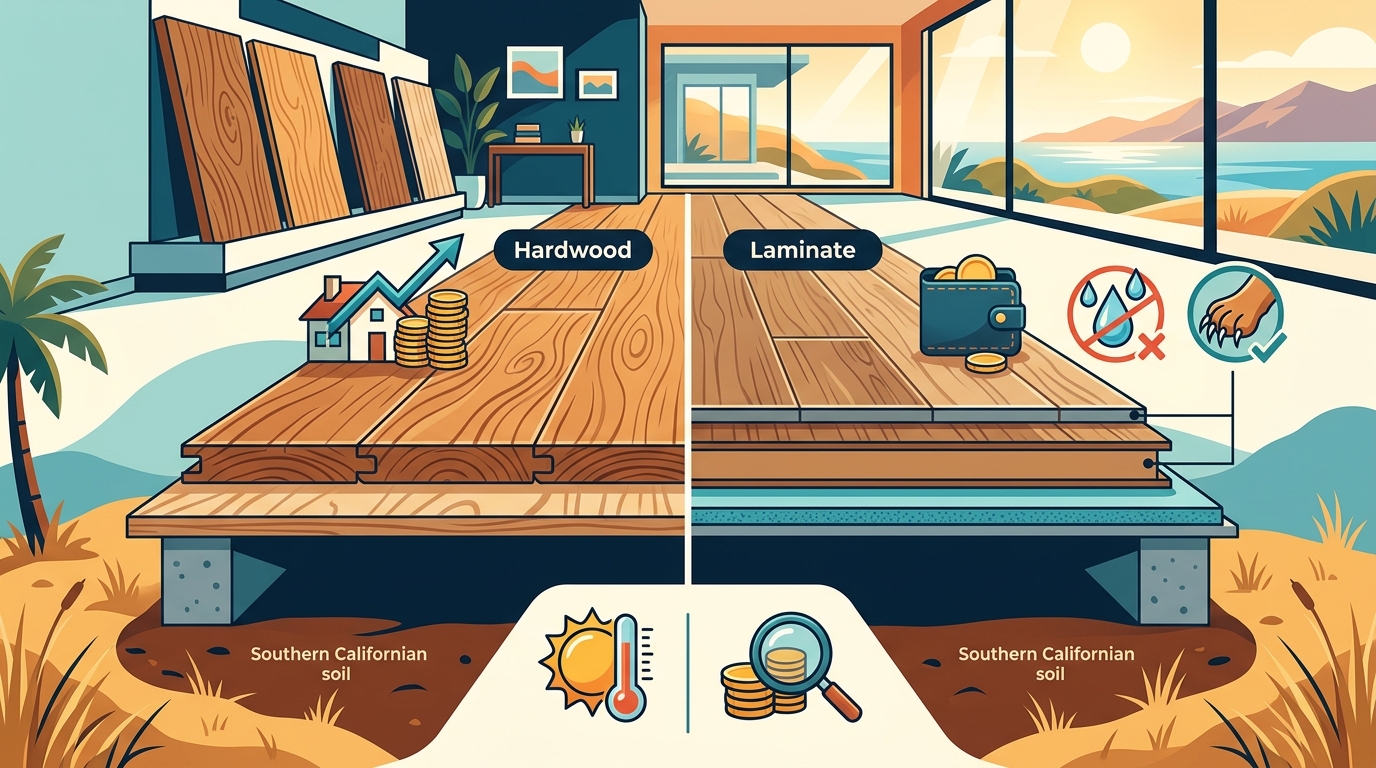
Maintenance and Longevity
Maintenance requirements vary significantly between the two options. Hardwood requires regular sweeping and occasional polishing or refinishing to maintain its luster. Spills must be wiped up immediately to prevent water damage. Over decades, hardwood can be refinished to look brand new, extending its life for 50 years or more.
Laminate is easier to maintain daily. It resists stains and requires only sweeping and damp mopping. However, once the wear layer is compromised, the plank cannot be repaired. Water damage to laminate is often irreversible, leading to swelling and buckling of the fiberboard core. This limits the lifespan of laminate to 15-25 years in most residential settings.
For homeowners planning to stay in their home long-term, hardwood offers a superior return on investment. For those seeking a cost-effective solution for a shorter tenure, laminate provides a durable and attractive alternative without the high maintenance burden.
Key Takeaways
- Hardwood flooring adds significant resale value to Southern California homes, often yielding a higher return on investment than laminate.
- Laminate flooring offers superior scratch resistance and is more affordable, making it ideal for high-traffic areas and pet owners.
- Hardwood can be refinished multiple times, extending its lifespan to 50+ years, while laminate typically lasts 15-25 years.
- Laminate installation is faster and less expensive due to its floating floor system, reducing labor costs by up to 50%.
- Southern California's dry climate favors laminate's stability, but hardwood remains the premium choice for traditional aesthetics.
- Hardwood is susceptible to moisture damage, whereas laminate handles humidity shifts better but fails catastrophically if submerged.
- Modern laminate technology offers realistic textures, but it lacks the authentic depth and tactile feel of real wood.
Frequently Asked Questions
Is laminate flooring better than hardwood for Southern California's climate?
Laminate is generally more stable in dry climates and handles humidity fluctuations better than solid hardwood. However, engineered hardwood is also a viable option for coastal areas with proper acclimation.
Can laminate flooring be refinished like hardwood?
No, laminate flooring cannot be refinished. The top wear layer is thin and cannot be sanded down. If damaged, individual planks must be replaced.
Which flooring adds more value to a home in Orange County?
Hardwood flooring consistently adds more value to homes in Orange County. Buyers perceive real wood as a premium feature and are willing to pay more for it during resale.
How long does laminate flooring last compared to hardwood?
Laminate typically lasts 15 to 25 years, while hardwood can last 50 years or more with proper maintenance and refinishing.
Is laminate flooring waterproof?
Most laminate is water-resistant but not waterproof. Prolonged exposure to water can cause the fiberboard core to swell. Waterproof laminate options exist but are less common.
What is the cost difference between laminate and hardwood installation?
Laminate installation is significantly cheaper, often costing 50% to 70% less than hardwood when including materials and professional labor.
Does laminate look fake compared to hardwood?
High-quality laminate with embossed textures can look very realistic. However, it lacks the natural depth and variation of real wood, which can be noticeable in direct sunlight.
Schedule Your Consultation
Choosing between laminate and hardwood is a significant decision that impacts your home's value, comfort, and maintenance routine. At Hardwood Flooring Depot, we specialize in helping Southern California homeowners navigate these choices with expert guidance. Visit our Irvine showroom to explore our extensive collection of hardwood and laminate options. Our team is ready to assist you in finding the perfect flooring solution for your specific needs and budget. Explore our accessories to complete your project with quality moldings and adhesives. Contact us today to schedule your free consultation and take the first step toward your dream flooring.