
Can I Install Tile Flooring Myself, or Do I Need a Professional in Southern California?
Home improvement projects in Southern California often begin with a simple question: can I save money by doing this myself? Tile flooring is a popular choice for its durability and aesthetic appeal, but the installation process is notoriously unforgiving. According to recent industry data, improper installation accounts for nearly 30% of all tile flooring failures, including cracking and grout separation. This statistic highlights why understanding the gap between DIY and professional installation is critical for homeowners in Irvine, Orange County, and the greater Los Angeles area. (Alassio Mediterranean 9 5)
Assessing Your Skill Level and Project Scope
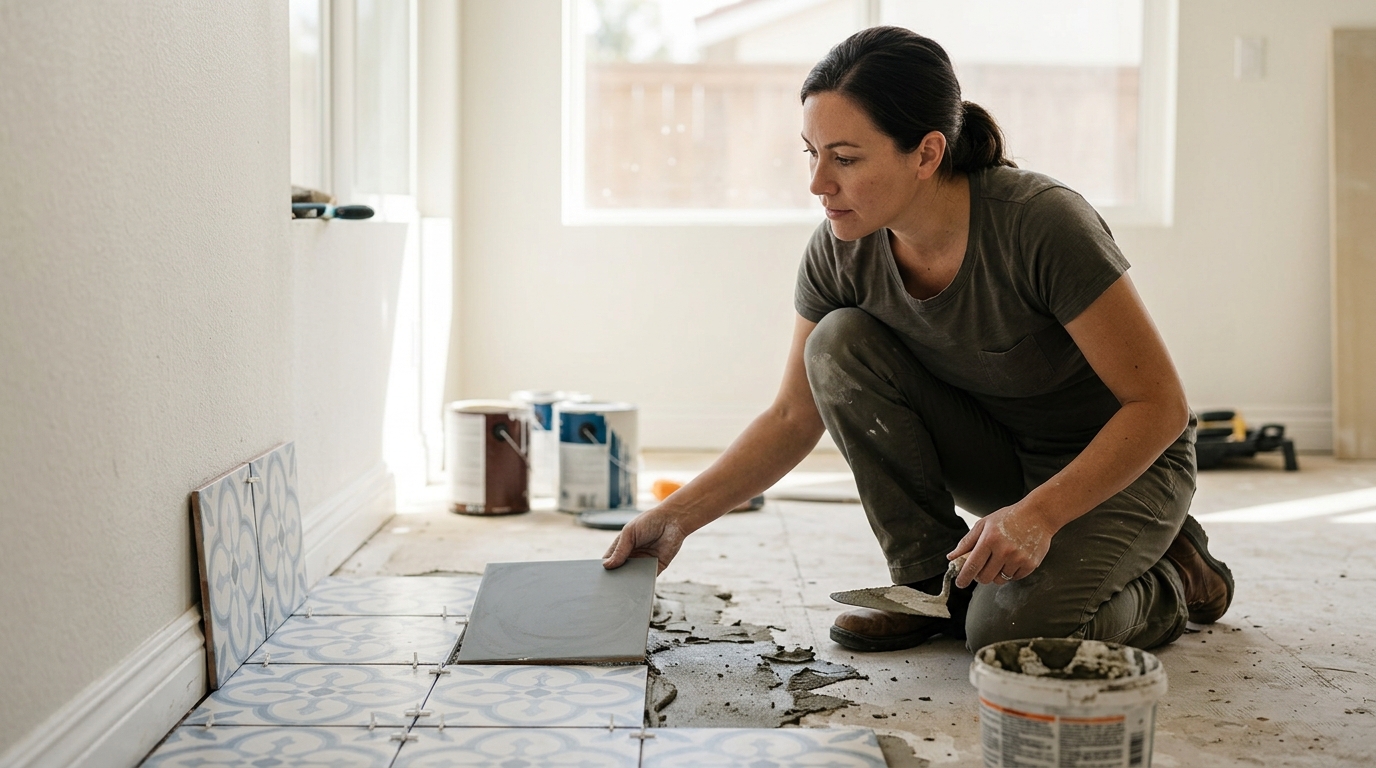
Tile installation is not merely about laying down squares. It is a multi-stage process that demands precision, patience, and physical endurance. Tile installation is the precise placement of ceramic, porcelain, or stone units onto a prepared substrate using adhesives and grout. For a novice, the learning curve is steep. A single error in measuring or cutting can ruin expensive materials and compromise the structural integrity of the floor.
Before picking up a tile cutter, you must evaluate the complexity of your space. Simple, rectangular rooms with minimal obstructions are more manageable for DIYers. However, bathrooms, kitchens with islands, and areas with numerous corners or doorways require advanced cutting skills. If you are considering hardwood flooring options for adjacent rooms, you must also consider how the tile height will transition to other surfaces, adding another layer of technical difficulty.
Physical demands are often underestimated. Lifting heavy bags of thinset mortar, kneeling for hours, and maintaining a consistent level across large areas requires significant stamina. If you have back issues or limited mobility, professional installation is not just a convenience; it is a necessity for your safety and the project's success.
Cost Analysis: Materials vs. Labor in Southern California
The primary driver for DIY interest is cost savings. In Southern California, labor rates for skilled tradespeople are among the highest in the nation. Professional tile installers in Orange County typically charge between $5 and $15 per square foot for labor alone, depending on the tile type and complexity. For a standard 200-square-foot bathroom, this adds $1,000 to $3,000 to your project total.
However, DIY costs are not just the price of the tile. You must factor in tool rental or purchase. A wet saw, which is essential for clean cuts on porcelain and ceramic, can cost $50 to $100 per day to rent or $200 to $500 to buy. If you do not own a level, trowels, spacers, and a tile cutter, these additional costs can eat into your savings. Furthermore, material waste is a hidden cost. DIYers typically waste 10-15% of materials due to cutting errors, whereas professionals optimize cuts to minimize waste.
When comparing costs, consider the long-term value. A professionally installed floor often comes with a warranty on the workmanship. If the tile cracks or grout fails within a few years due to installation error, you will pay twice. In contrast, a DIY error is a sunk cost that may require a complete redo.
The Hidden Complexity of Subfloor Preparation
The most critical phase of tile installation is not the laying of the tile, but the preparation of the subfloor. Subfloor preparation is the process of ensuring the underlying surface is flat, clean, dry, and structurally sound to support the tile assembly. If the subfloor is uneven, the tile will not lay flat, leading to lippage (uneven edges) and eventual cracking under foot traffic.
In older Southern California homes, subfloors may be wood-based and prone to movement. Tile is rigid and brittle. Without proper underlayment, such as cement backer board or a specialized uncoupling membrane, the natural expansion and contraction of the wood subfloor will transfer stress to the tile, causing it to crack. This is a technical requirement that DIYers often overlook, assuming that a smooth plywood surface is sufficient.
Moisture barriers are also crucial, especially in bathrooms and kitchens. Improper moisture management can lead to mold growth beneath the tile, which is costly and hazardous to remove. Professionals know how to test for moisture levels and apply the correct waterproofing membranes, ensuring the longevity of your investment.
Southern California Climate and Material Behavior
Living in Southern California presents unique challenges for flooring. The region experiences significant temperature fluctuations, particularly in inland areas like Riverside and San Bernardino. Thermal expansion is the physical process where materials increase in volume as temperature rises. Tile and grout expand and contract with these changes. If expansion joints are not calculated and installed correctly, the tile can buckle or pop up.
Additionally, the hard water common in many SoCal municipalities can affect grout appearance and maintenance. While this does not impact installation directly, it influences the choice of grout type. Epoxy grout, for example, is more resistant to staining and water penetration but is significantly harder to install than cement-based grout. Professionals are trained to handle these specialized materials, whereas DIYers may struggle with the rapid curing time and difficulty of cleanup.
For those interested in other flooring types, understanding how climate affects materials is universal. Just as tile requires expansion joints, flooring accessories like transitions and moldings must be selected to accommodate regional humidity and temperature shifts to prevent gaps or warping.
DIY vs. Professional Installation Comparison
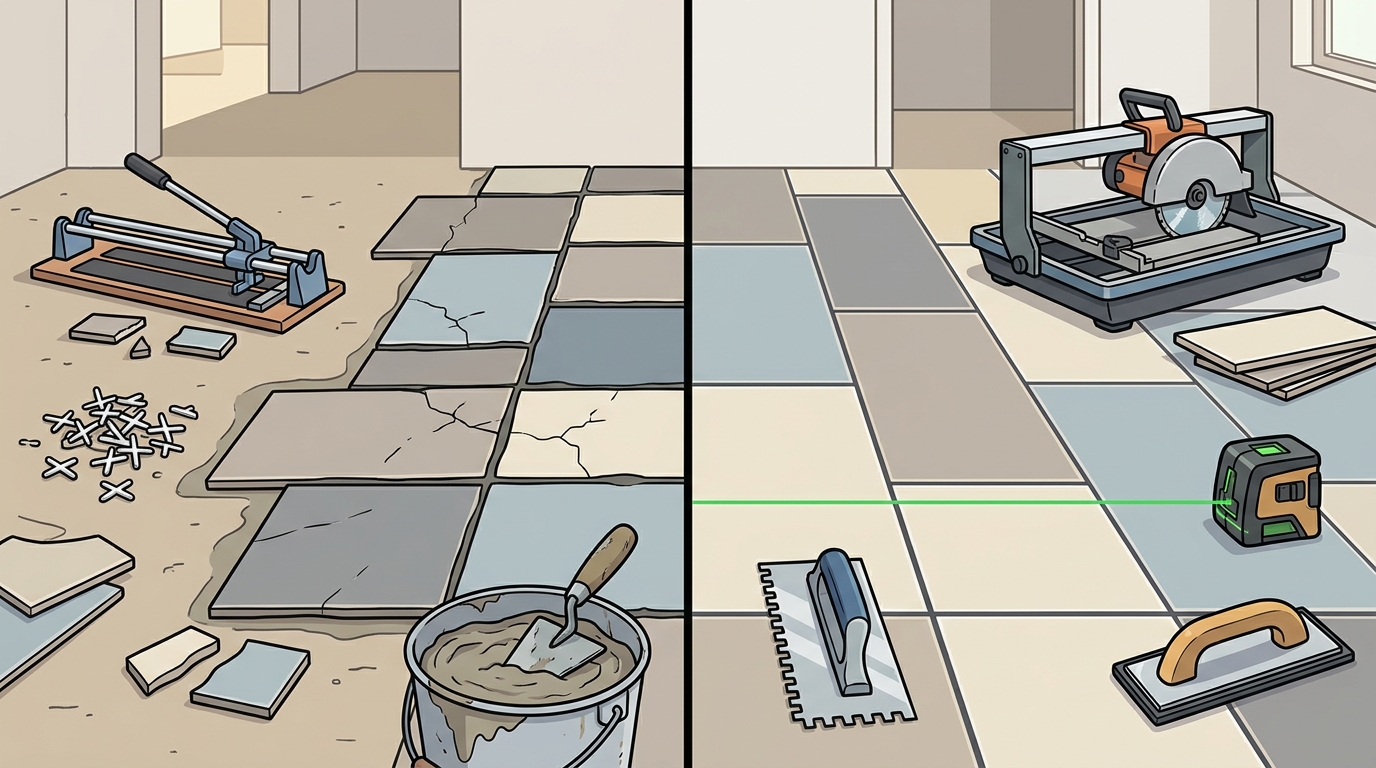
To help you decide, here is a detailed comparison of the two approaches. This table highlights the key differences in cost, time, quality, and risk.
| Factor | DIY Installation | Professional Installation |
|---|---|---|
| Upfront Cost | Lower (Materials + Tool Rental) | Higher (Labor + Materials) |
| Time Commitment | High (Weekends to Weeks) | Low (1-3 Days) |
| Quality & Precision | Variable (Depends on Skill) | High (Guaranteed Precision) |
| Warranty | Material Only | Material + Workmanship |
| Subfloor PrepOften Overlooked | Comprehensive & Code-Compliant | |
| Resale Value Impact | Neutral to Negative if Poor | Positive (Professional Finish) |
Key Takeaways for Homeowners
- Cost vs. Value: While DIY saves on labor, tool costs and material waste can reduce savings by up to 20%.
- Subfloor is Key: Proper underlayment and moisture barriers are non-negotiable for tile longevity in Southern California.
- Climate Impact: Thermal expansion requires precise joint calculation, which professionals handle routinely.
- Tool Requirements: A wet saw is essential for porcelain and ceramic; renting or buying adds significant cost.
- Warranty Protection: Professional installation often includes a workmanship warranty, offering peace of mind.
- Resale Value: High-quality professional tile installation can enhance home value, while poor DIY work can deter buyers.
- Complexity Matters: Simple rooms may be DIY-friendly, but bathrooms and kitchens with complex layouts require pros.
Frequently Asked Questions
How much does it cost to hire a professional tile installer in Orange County?
Labor costs for professional tile installation in Orange County typically range from $5 to $15 per square foot. This varies based on the complexity of the pattern, the type of tile, and the condition of the subfloor.
Can I install tile flooring over existing hardwood?
It is generally not recommended to install tile directly over hardwood due to movement and height issues. A professional will likely need to remove the hardwood or install a specialized underlayment to ensure a stable base.
What is the most common mistake DIYers make when installing tile?
The most common mistake is inadequate subfloor preparation. Failing to use cement backer board or uncoupling membranes can lead to cracked tiles and grout failure over time.
How long does it take for a professional to install tile?
A professional crew can typically install tile in a standard bathroom or kitchen in 1 to 3 days, including prep, installation, and initial grouting. Full curing and sealing may take additional time.
Do I need to seal tile and grout?
Porcelain and ceramic tiles are usually non-porous and do not require sealing. However, natural stone tiles and cement-based grout do require sealing to prevent staining and moisture damage.
What is the best time of year to install tile flooring in Southern California?
Tile can be installed year-round in Southern California. However, moderate temperatures in spring and fall can make the curing process more predictable, reducing the risk of rapid drying or expansion issues.
How do I choose between DIY and professional installation?
Choose DIY if you have experience, the right tools, and a simple project layout. Choose a professional if you lack experience, have a complex layout, or want a warranty on the workmanship.
Schedule Your Flooring Consultation
Deciding between DIY and professional installation is a significant choice that impacts your home's value and your peace of mind. At Hardwood Flooring Depot, we specialize in guiding homeowners through every step of the flooring process, from material selection to expert installation. Our team in Irvine understands the unique challenges of Southern California homes and ensures your flooring lasts for years to come.
Do not risk your investment on guesswork. Contact us today to schedule a consultation and discover the perfect flooring solution for your home. Visit our main page to explore our extensive collection of hardwood, tile, and luxury vinyl options.