
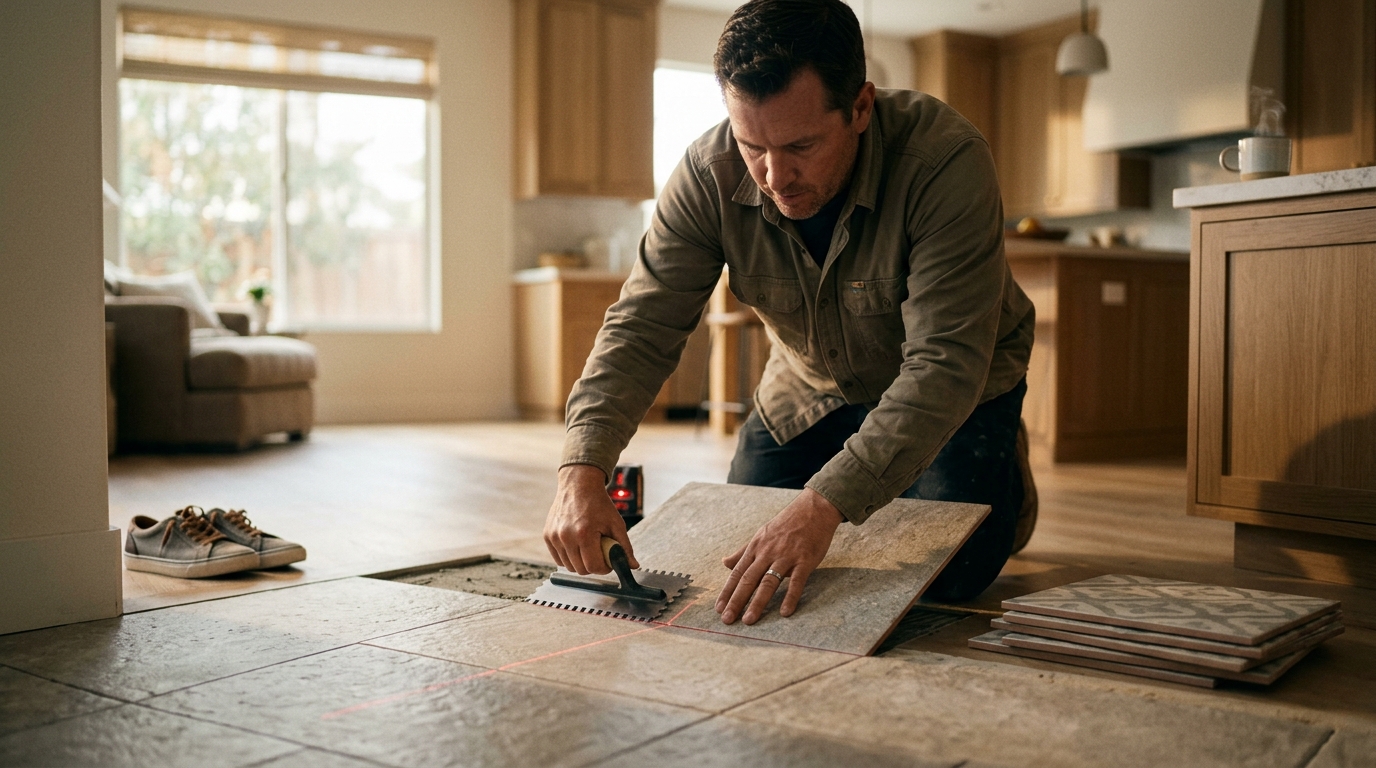
Homeowners in Southern California frequently attempt DIY tile projects to save money, but industry data shows that approximately 68 percent of amateur installations require costly rework within the first three years. This high failure rate stems from improper substrate preparation, incorrect mortar mixing, and inadequate expansion gap planning. Understanding the technical requirements before purchasing materials prevents wasted budget and structural damage. Professional contractors utilize calibrated moisture meters and laser leveling systems to guarantee long-term durability. Evaluating your skill level against these industry benchmarks ensures your flooring investment withstands regional humidity and daily foot traffic. (Bosa Mediterranean 9 5)
Understanding Tile Installation Complexity
Tile installation involves precise geometric calculations and material science principles that extend far beyond simple placement. Substrate preparation is the foundational process of leveling and treating the underlying surface before adhesive application. Concrete slabs and wooden subfloors demand completely different preparation methodologies. Concrete requires moisture barrier application and crack isolation membranes to prevent transmission of structural shifts. Wooden subfloors need cement backer boards or uncoupling membranes to create a rigid, non-flexing base. Skipping these foundational steps guarantees premature failure. The substrate must remain completely clean, dry, and structurally sound before any adhesive touches the surface.
Substrate Preparation Standards
Concrete slabs require moisture barrier application and crack isolation membranes to prevent transmission of structural shifts. Wooden subfloors need cement backer boards or uncoupling membranes to create a rigid, non-flexing base. Skipping these foundational steps guarantees premature failure. The substrate must remain completely clean, dry, and structurally sound before any adhesive touches the surface.
DIY Tile Flooring: Tools and Skill Requirements
Successful DIY tile installation demands specialized equipment that most homeowners do not own. A quality wet saw with diamond blades handles dense porcelain and natural stone without chipping. Laser levels ensure perfectly straight reference lines across large rooms. Spacers maintain consistent grout joints, typically ranging from one eighth inch to three sixteenths inch depending on tile format. Rubber floaters spread thin-set mortar evenly while forcing it into the back of each tile. Without these tools, achieving a professional finish becomes nearly impossible. Renting equipment adds significant hidden costs to your project budget.
Material Selection Considerations
Porcelain tiles offer superior water resistance and durability compared to standard ceramic alternatives. Natural stone requires specialized sealers and careful handling to prevent staining and etching. Large format tiles demand advanced leveling systems to prevent lippage, which occurs when adjacent tiles sit at different heights. Smaller mosaic sheets simplify layout but increase grout line maintenance requirements. Matching your material choice to your skill level prevents costly mistakes during the installation phase.
When Professional Installation Becomes Mandatory
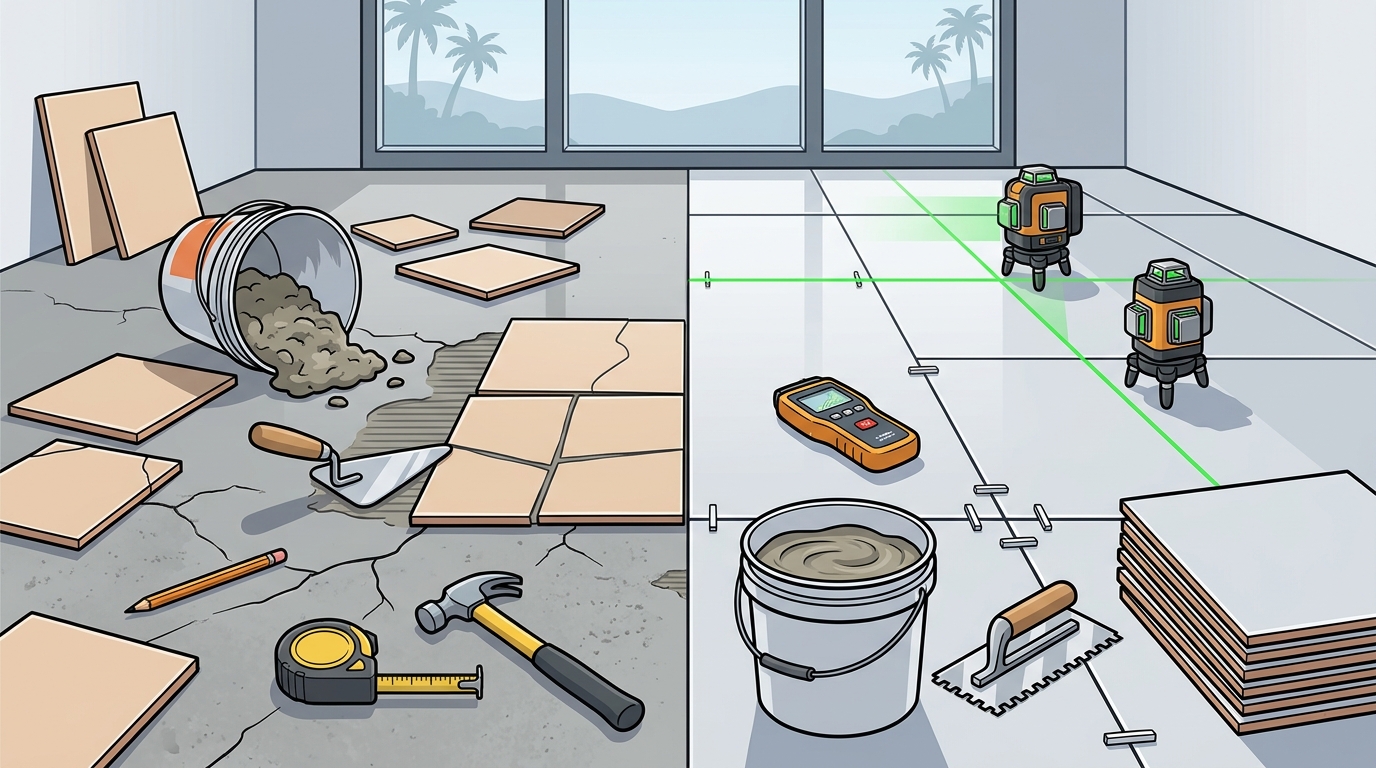
Complex room layouts with multiple angles, alcoves, and custom borders exceed typical DIY capabilities. Wet areas like bathrooms and kitchens require precise slope calculations toward drains to prevent water pooling. Commercial spaces demand specific load ratings and slip resistance metrics that require certified installation methods. Large format tiles exceeding twenty four inches in length require specialized lifting equipment and advanced leveling systems. Professional contractors carry liability insurance that protects homeowners from accidental damage during installation. The technical precision required for these scenarios justifies hiring certified installers.
Warranty and Liability Protection
Manufacturer warranties frequently become void when installations do not meet specific industry standards. Professional contractors follow Tile Council of North America guidelines to maintain full product coverage. DIY errors often result in water intrusion, subfloor rot, and structural damage that homeowners must repair independently. Certified installers provide workmanship guarantees that cover labor and material defects for extended periods. This protection eliminates financial risk during the initial project phase.
Regional Climate Factors in Southern California
Southern California experiences distinct seasonal humidity fluctuations that directly impact flooring performance. Coastal regions maintain higher moisture levels that require vapor retarders beneath all tile installations. Inland valleys experience extreme temperature swings that cause expansion and contraction cycles. Proper expansion joints must accommodate these environmental shifts to prevent buckling or cracking. Regional building codes often mandate specific moisture testing procedures before installation begins. Professional teams understand these local requirements and implement appropriate mitigation strategies.
Moisture Testing Protocols
Calcium chloride tests and relative humidity probes measure moisture vapor emission rates from concrete slabs. Excessive moisture levels require epoxy moisture barriers or specialized drying compounds before installation proceeds. Ignoring these regional protocols leads to adhesive failure, mold growth, and tile delamination. Certified professionals utilize calibrated testing equipment to verify slab conditions meet manufacturer specifications. This verification step prevents costly callbacks and long-term structural damage.
Cost Analysis: Materials Versus Labor
DIY tile projects appear cheaper initially but frequently incur hidden expenses that exceed professional quotes. Equipment rentals, material waste from cutting errors, and corrective labor quickly accumulate. Professional installations include precise material calculations that minimize waste and optimize layout efficiency. Labor costs vary by region but typically range from four to eight dollars per square foot depending on tile complexity. Premium materials like natural stone or large format porcelain require specialized handling that increases installation time. Comparing total project costs reveals that professional installation often delivers better long-term value.
Material Waste and Optimization
Amateur installers typically waste fifteen to twenty percent of materials due to improper cutting techniques. Professional teams utilize advanced layout planning software to maximize material usage and minimize cuts. Custom borders, intricate patterns, and diagonal layouts require precise mathematical calculations that amateurs rarely master. Reducing material waste directly impacts your overall project budget. Professional procurement networks also secure trade pricing that homeowners cannot access independently.
| Factor | DIY Installation | Professional Installation |
|---|---|---|
| Equipment Requirements | High rental costs and specialized tools | Comprehensive industrial equipment included |
| Material Waste Percentage | Fifteen to twenty percent | Five to eight percent |
| Warranty Coverage | Manufacturer only, often voided | Full workmanship and material guarantee |
| Time Investment | Multiple weekends and extensive learning | Efficient completion within scheduled timeframe |
| Regional Code Compliance | Homeowner responsibility | Verified against local building standards |
Key Takeaways
- Approximately 68 percent of amateur tile installations require rework within three years due to improper substrate preparation.
- Porcelain tiles offer superior water resistance and durability compared to standard ceramic alternatives for high-traffic areas.
- Large format tiles exceeding twenty four inches require advanced leveling systems to prevent lippage and structural stress.
- Professional contractors follow Tile Council of North America guidelines to maintain full product coverage and liability protection.
- Southern California humidity fluctuations require vapor retarders and precise expansion joints to prevent buckling.
- Amateur installers typically waste fifteen to twenty percent of materials due to improper cutting techniques.
- Hardwood Flooring Depot Irvine provides comprehensive tile installation services with certified professionals and trade pricing.
Frequently Asked Questions
Is DIY tile flooring suitable for large open floor plans?
Large open floor plans require precise laser leveling and advanced expansion joint planning to prevent cracking. Professional teams utilize specialized equipment to maintain perfectly straight reference lines across expansive spaces. DIY installations often struggle with layout consistency and material waste in these scenarios. Hiring certified installers ensures structural integrity and aesthetic precision throughout the entire room.
How do I determine if my subfloor is ready for tile?
Subfloor readiness requires moisture testing, flatness verification, and structural stability assessment. Concrete slabs must meet specific moisture vapor emission thresholds before installation proceeds. Wooden subfloors require cement backer boards or uncoupling membranes to create a rigid base. Professional contractors utilize calibrated testing equipment to verify these conditions meet manufacturer specifications.
What is the average lifespan of professionally installed tile flooring?
Professionally installed tile flooring typically lasts fifty to one hundred years with proper maintenance. The material itself remains virtually indestructible when installed according to industry standards. Grout lines require periodic sealing and cleaning to maintain aesthetic appeal and water resistance. Regular maintenance extends the functional lifespan significantly beyond initial installation expectations.
Can I install tile over existing hardwood floors?
Installing tile over existing hardwood floors requires specific structural assessments and reinforcement protocols. The existing subfloor must support additional weight without flexing or deflecting under load. Cement backer boards or specialized uncoupling membranes create the necessary rigid base. Professional contractors evaluate structural capacity before proceeding with any overlay installation.
How does Southern California humidity affect tile installation?
Regional humidity fluctuations cause expansion and contraction cycles that require precise expansion joints. Coastal areas maintain higher moisture levels that demand vapor retarders beneath all installations. Inland valleys experience extreme temperature swings that stress adhesive bonds over time. Professional teams implement regional mitigation strategies to prevent buckling and long-term structural damage.
What warranty coverage do I receive with professional installation?
Professional installations typically include comprehensive workmanship guarantees that cover labor and material defects. Manufacturer warranties remain valid when installations meet specific industry standards and guidelines. DIY errors frequently void product coverage and leave homeowners responsible for all repair costs. Certified installers provide liability protection that eliminates financial risk during the project phase.
How much does professional tile installation cost in Southern California?
Professional tile installation costs typically range from four to eight dollars per square foot depending on complexity. Large format tiles, natural stone, and intricate patterns increase labor requirements and pricing. Material selection and substrate preparation also influence final project quotes. Comparing total project costs reveals that professional installation delivers superior long-term value and durability.
Final Recommendation and Next Steps
Tile installation demands precise technical execution, specialized equipment, and regional climate awareness that most homeowners cannot replicate. Professional contractors eliminate guesswork, ensure code compliance, and provide comprehensive warranty protection. Hardwood Flooring Depot Irvine offers certified tile installation services with trade pricing and expert guidance. Visit our showroom to explore premium collections and schedule a consultation with our installation specialists. Schedule your professional tile consultation today and transform your space with confidence. Explore our complete flooring resources for detailed material guides. Review our premium installation accessories to ensure proper substrate preparation. Contact our team to discuss your kitchen remodeling requirements. Request a free project estimate and secure your preferred installation window.