
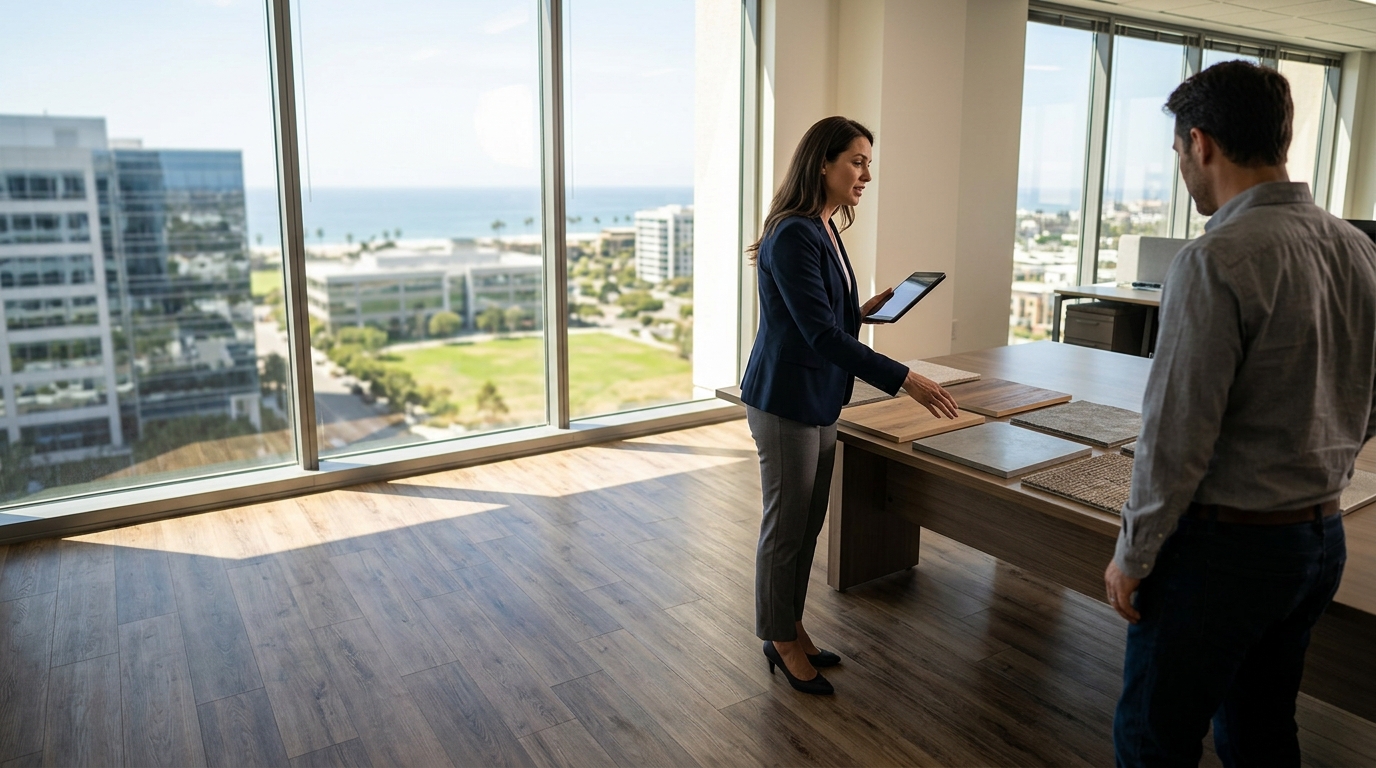
Commercial property managers in Southern California prioritize durability and aesthetic compliance when selecting surface materials. Recent industry data shows that over 68 percent of retail and office spaces now replace flooring every seven years to maintain operational efficiency. This frequent turnover drives demand for high-performance materials that withstand heavy foot traffic while meeting strict regional building codes. Business owners must evaluate material specifications, lifecycle costs, and regional supplier networks to secure long-term value. (Bosa Mediterranean 9 5)
Commercial Carpet Solutions
Carpet remains the dominant choice for corporate offices and hospitality venues across the region. Commercial carpet solutions is a specialized category of textile flooring engineered to resist abrasion, staining, and moisture exposure. Major manufacturers produce modular tiles and broadloom rolls that meet strict fire safety ratings. These products often incorporate recycled content to support sustainability mandates. Facility managers frequently select nylon blends for high-traffic corridors because they recover quickly from furniture indentation. Regional distributors stock these collections to ensure rapid project fulfillment. Commercial carpet tiles dominate corporate spaces due to modular replacement capabilities. Facility managers often replace individual tiles rather than entire rooms to minimize operational disruption.
Hard Surface Alternatives
Hard surface alternatives is a broad classification covering vinyl composite tiles, luxury vinyl planks, and engineered wood products designed for business environments. These materials deliver exceptional water resistance and require minimal maintenance routines. Many modern commercial spaces prefer rigid core vinyl because it installs directly over existing substrates without extensive demolition. The material also provides superior acoustic dampening when paired with appropriate underlayments. Architects frequently specify these products for healthcare facilities and educational campuses due to their hygienic surface properties. Green building standards increasingly favor recycled content and low volatile organic compound emissions. Facility directors should verify that all selected materials carry recognized third-party testing certifications to comply with local fire marshal inspections.
Installation Standards
Proper installation protocols directly impact the longevity of any commercial flooring system. Certified contractors follow strict subfloor preparation guidelines to prevent moisture vapor transmission. Adhesive selection must align with the specific substrate composition and expected load requirements. Regional building codes mandate specific flame spread ratings for all public assembly spaces. Project managers should verify that installers carry appropriate liability coverage and manufacturer certifications. These verification steps prevent costly callbacks and warranty disputes. Industry compliance guidelines require documented subfloor moisture testing before any adhesive application begins. Facility managers must review warranty documentation to ensure coverage aligns with actual usage patterns.
Regional Supplier Networks
Southern California maintains a robust distribution ecosystem that supports large-scale commercial projects. Local suppliers stock extensive inventories to accommodate tight construction schedules. Businesses benefit from direct access to major brand showrooms and technical support teams. Regional logistics networks ensure timely delivery to job sites across Los Angeles, Orange County, and San Diego. Establishing relationships with authorized dealers often unlocks volume pricing and priority scheduling. These partnerships streamline the procurement process for complex multi-phase developments. Regional supplier networks maintain deep inventory to support accelerated construction timelines. Facility directors should request detailed material samples and lifecycle cost projections tailored to specific operational requirements.
Cost Optimization
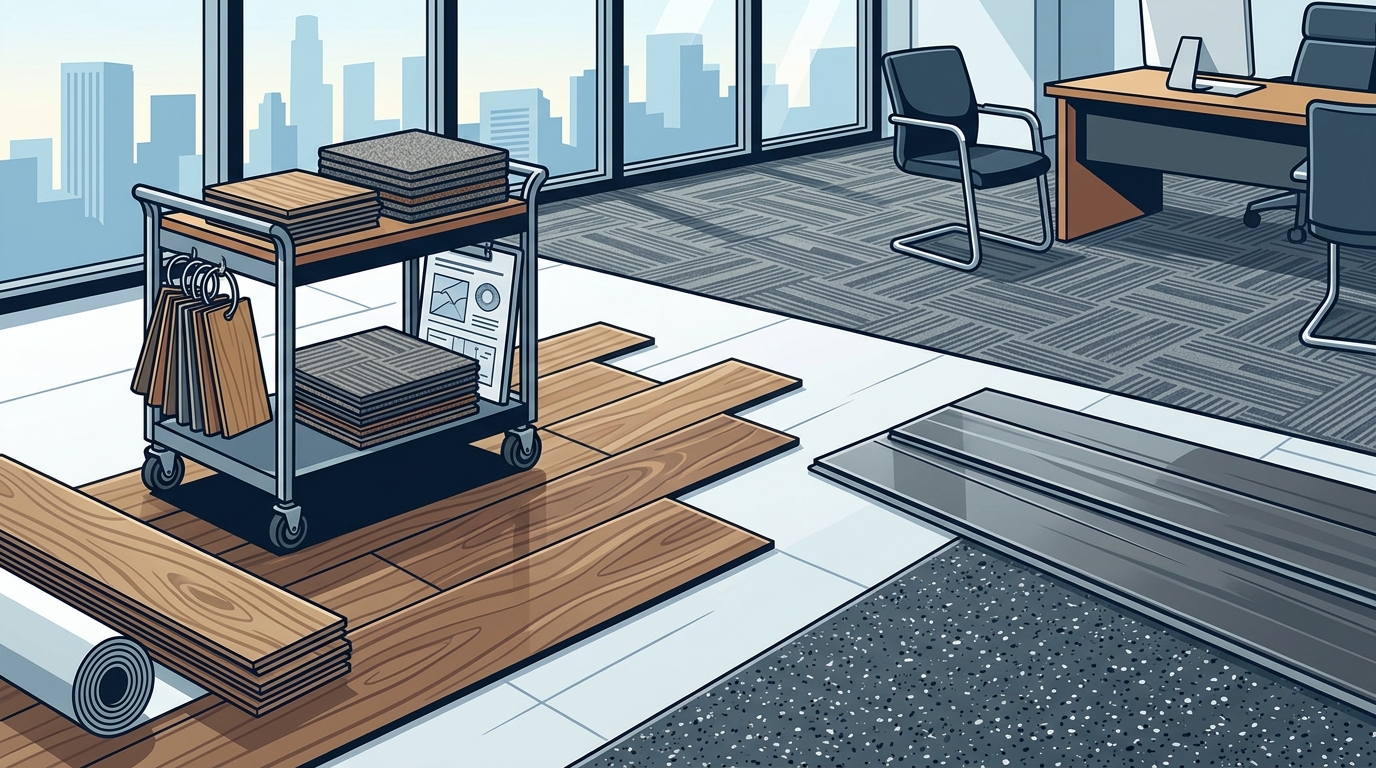
Lifecycle cost analysis remains the primary decision factor for facility directors. Initial material expenses rarely reflect the true financial impact of a flooring system. Maintenance requirements, replacement cycles, and energy efficiency contribute to long-term budgeting. High-performance surfaces often reduce cleaning labor costs and extend replacement intervals. Facility managers should request detailed warranty documentation before finalizing purchase orders. Transparent pricing structures prevent unexpected change orders during active construction phases. Lifecycle cost analysis consistently outweighs initial material pricing in procurement decisions. Property owners should evaluate transferable warranty options to increase resale value and simplify future facility transitions.
| Material Category | Primary Application | Average Lifespan | Maintenance Frequency |
|---|---|---|---|
| Commercial Carpet Tiles | Corporate offices and hotels | 10 to 15 years | Weekly vacuuming and quarterly extraction |
| Rigid Core Vinyl | Healthcare and retail | 15 to 20 years | Daily damp mopping and periodic stripping |
| Engineered Wood | Lobby and executive suites | 20 to 30 years | Monthly buffing and annual refinishing |
| Laminate Planks | Break rooms and corridors | 10 to 12 years | Daily sweeping and damp mopping |
Key Takeaways
- Commercial carpet tiles dominate corporate spaces due to modular replacement capabilities.
- Rigid core vinyl provides superior moisture resistance for ground-level installations.
- Engineered wood delivers premium aesthetics for executive and hospitality environments.
- Regional suppliers maintain deep inventory to support accelerated construction timelines.
- Lifecycle cost analysis consistently outweighs initial material pricing in procurement decisions.
- Manufacturer certifications ensure proper installation and valid warranty coverage.
Frequently Asked Questions
What is the average lifespan of commercial carpet tiles?
Commercial carpet tiles typically last between 10 and 15 years depending on foot traffic volume and maintenance routines. Facility managers often replace individual tiles rather than entire rooms to minimize operational disruption.
How does rigid core vinyl compare to traditional sheet vinyl?
Rigid core vinyl features a stone plastic composite or wood plastic composite core that provides superior dimensional stability. Traditional sheet vinyl relies on fiberglass reinforcement and often requires heat welding at seams to prevent moisture infiltration.
Are engineered wood products suitable for high-moisture environments?
Engineered wood products utilize multiple plywood layers bonded with moisture-resistant adhesives to improve dimensional stability. These products perform well in controlled indoor environments but require strict humidity monitoring near exterior walls.
What maintenance schedule do facility managers typically follow?
Most facility managers implement daily dry dust mopping and weekly wet extraction or damp mopping protocols. Annual professional deep cleaning extends surface life and preserves manufacturer warranty requirements.
How do regional building codes impact flooring material selection?
Regional building codes mandate specific flame spread ratings and smoke development indices for all public assembly spaces. Materials must carry recognized third-party testing certifications to comply with local fire marshal inspections.
What warranty coverage should commercial property owners expect?
Commercial property owners should expect limited lifetime warranties that cover manufacturing defects and excessive wear. Transferable warranty options often increase property resale value and simplify future facility transitions.
Next Steps for Your Project
Facility directors and property managers should schedule a comprehensive site assessment to evaluate subfloor conditions and traffic patterns. Our authorized team provides detailed material samples and lifecycle cost projections tailored to your specific operational requirements. Contact our commercial sales division to secure priority scheduling and volume pricing for your upcoming renovation. Visit our main office to review current inventory and discuss custom project specifications. Schedule a site assessment to evaluate subfloor conditions and traffic patterns. Our authorized team provides detailed material samples and lifecycle cost projections tailored to specific operational requirements.