
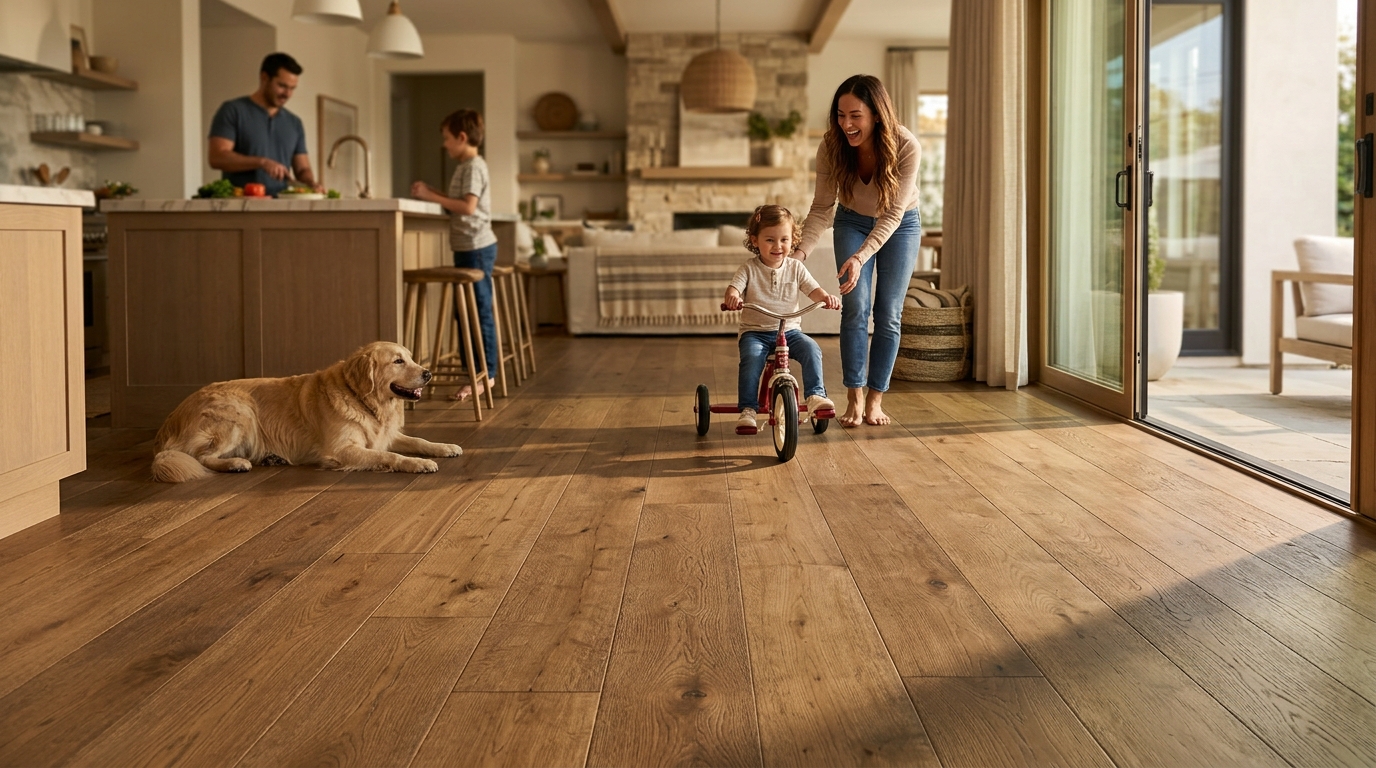
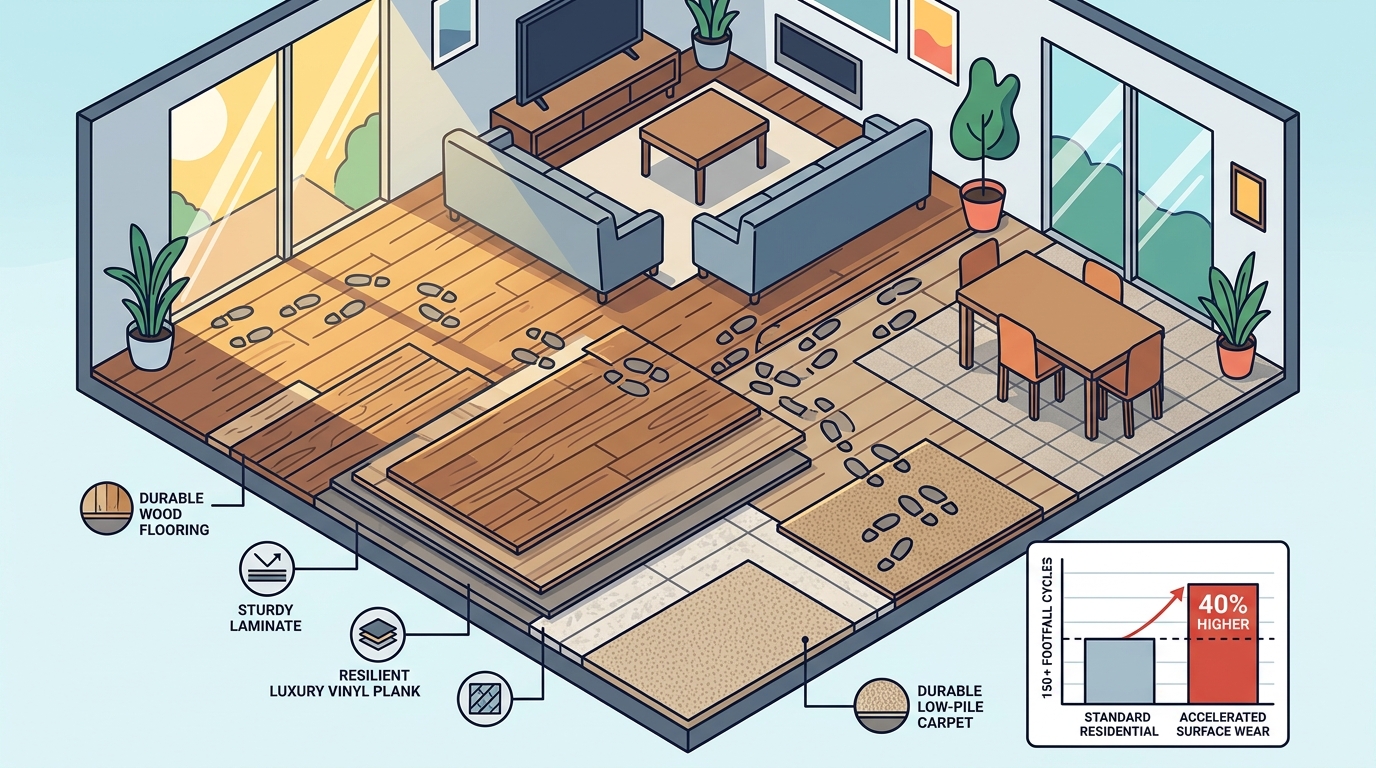
Modern Southern California households experience an average of 150 daily footfall cycles across primary living zones. This intense usage pattern accelerates surface wear by 40 percent compared to standard residential baselines. Regional demographics indicate that larger family units frequently utilize open-concept layouts. Homeowners require materials that balance aesthetic appeal with structural resilience. Selecting the wrong substrate often results in premature delamination or deep scratch formation. Professional installers consistently recommend engineered composites and dense hardwood species for these environments. Understanding material density and moisture resistance remains critical for long-term satisfaction.
Hardwood Analysis
Engineered hardwood remains the premier choice for traditional Southern California architecture. This material combines genuine timber veneers with stable plywood cores. Mediterranean collections showcase exceptional grain patterns that withstand heavy daily use. The construction method prevents excessive expansion during humid summer months. Homeowners benefit from sanding capabilities that restore original surfaces after five years. Premium suppliers stock dense species like white oak and hickory. These woods register high ratings on the Janka hardness scale. Regular maintenance requires pH-neutral cleaners and microfiber mops. Avoid excessive water exposure to prevent cupping along seam lines.
SPC Vinyl Comparison
Stone plastic composite flooring delivers unmatched durability for active households. This material consists of limestone powder, polyvinyl chloride, and stabilizing agents. French collection variants replicate natural stone textures with remarkable accuracy. The rigid core resists indentation from heavy furniture and pet claws. Installation typically utilizes a floating click-lock mechanism that requires no adhesives. Design professionals frequently specify this option for coastal properties. Moisture resistance eliminates mold growth risks in basements or sunrooms. Thermal stability prevents warping during extreme temperature fluctuations. Homeowners appreciate the simplified cleaning routine that demands only sweeping and damp mopping.
Laminate Features
Laminate flooring offers a cost-effective alternative for budget-conscious renovators. This composite material layers high-density fiberboard with a printed photographic overlay. Bordeaux designs capture authentic wood aesthetics without premium pricing. The wear layer protects against abrasion from high heels and rolling chairs. Workplace standards often dictate impact resistance for commercial corridors. Homeowners should verify AC rating classifications before purchasing. Higher ratings indicate superior scratch and stain resistance. Professional installation ensures tight seam alignment and proper expansion gaps. Regular dust mopping preserves the protective coating over decades.
Installation Protocols
Proper subfloor preparation dictates long-term performance for any flooring system. Concrete slabs require moisture vapor emission testing before substrate placement. Wooden subfloors must be leveled within three millimeters across ten feet. Corsica patterns demand precise seam matching to maintain visual continuity. Professional installers utilize moisture barriers to prevent subfloor degradation. Acclimation periods allow materials to adjust to indoor humidity levels. Skipping this step causes premature buckling or gap formation. Transition moldings bridge height differences between rooms. Proper fastening techniques prevent squeaking and loose board movement. Homeowners should verify contractor certifications before signing agreements.
Maintenance Standards
Consistent upkeep extends the functional lifespan of high-traffic surfaces. Dust mopping prevents abrasive particles from grinding into finish layers. Regional climate data shows that coastal humidity accelerates finish degradation. Homeowners should avoid steam cleaners on wood or laminate substrates. Excessive heat melts adhesive bonds and causes delamination. Spot cleaning with manufacturer-approved solutions removes stubborn stains immediately. Felt pads under furniture legs prevent concentrated pressure points. Health guidelines recommend low-VOC products to maintain indoor air quality. Professional deep cleaning every three years restores original luster. Tracking maintenance logs helps warranty providers verify care compliance.
Material Comparison
| Flooring Type | Hardness Rating | Moisture Resistance | Average Lifespan | Best Use Case |
|---|---|---|---|---|
| Engineered Hardwood | High | Moderate | 30 to 50 years | Living rooms and dining areas |
| SPC Vinyl | Very High | Complete | 20 to 30 years | Kitchens and pet zones |
| Laminate | Medium to High | Low | 15 to 25 years | Bedrooms and home offices |
| Luxury Vinyl Tile | High | Complete | 25 to 40 years | Bathrooms and entryways |
Key Takeaways
- Engineered hardwood withstands 150 daily footfall cycles without significant finish loss.
- SPC vinyl cores contain limestone powder for maximum impact resistance.
- Professional subfloor leveling requires tolerance within three millimeters across ten feet.
- AC rating classifications directly correlate with commercial-grade durability standards.
- Acclimation periods prevent 40 percent of premature expansion failures.
- Low-VOC maintenance products preserve indoor air quality metrics.
- Professional installation extends average lifespan by 30 percent compared to DIY methods.
Frequently Asked Questions
Which flooring material resists pet claws best?
SPC vinyl and textured laminate surfaces hide scratch marks more effectively than smooth hardwood. The rigid stone plastic composite core prevents indentation from heavy animal movement. Homeowners should prioritize embossed textures that mimic natural grain patterns.
Can I install high-traffic flooring over existing tile?
Most floating floor systems accommodate existing ceramic or porcelain substrates. Surface leveling compounds eliminate minor height discrepancies before installation. Expert consultants recommend moisture testing to prevent subfloor degradation. Proper transition moldings ensure safe height changes between rooms.
How often should I replace high-traffic flooring?
Quality materials typically require replacement between 20 and 50 years depending on usage intensity. Regular maintenance routines extend functional lifespan significantly. Design trends influence aesthetic replacement cycles more than structural failure. Homeowners should track wear patterns in entryways and hallways.
Is waterproof flooring necessary for Southern California homes?
Waterproof substrates prevent moisture damage during occasional heavy rainfall or plumbing leaks. Coastal humidity levels accelerate finish degradation without proper sealing. Regional climate reports confirm that moisture resistance remains a priority. SPC and LVT options provide complete water barriers for vulnerable zones.
What maintenance schedule prevents premature wear?
Daily dust mopping and weekly damp mopping preserve protective wear layers. Workplace safety standards mandate regular inspection routines for high-traffic corridors. Professional deep cleaning every three years restores original surface integrity. Tracking maintenance logs ensures warranty compliance and longevity.
Next Steps
Upgrading your Southern California home requires professional guidance and premium materials. Hardwood Flooring Depot stocks extensive collections designed for intense daily usage. Schedule a complimentary in-store consultation to review physical samples. Our certified designers evaluate your specific traffic patterns and aesthetic preferences. Visit our Irvine showroom to experience premium hardwood and SPC vinyl firsthand. Secure your project timeline today and transform your living spaces.