
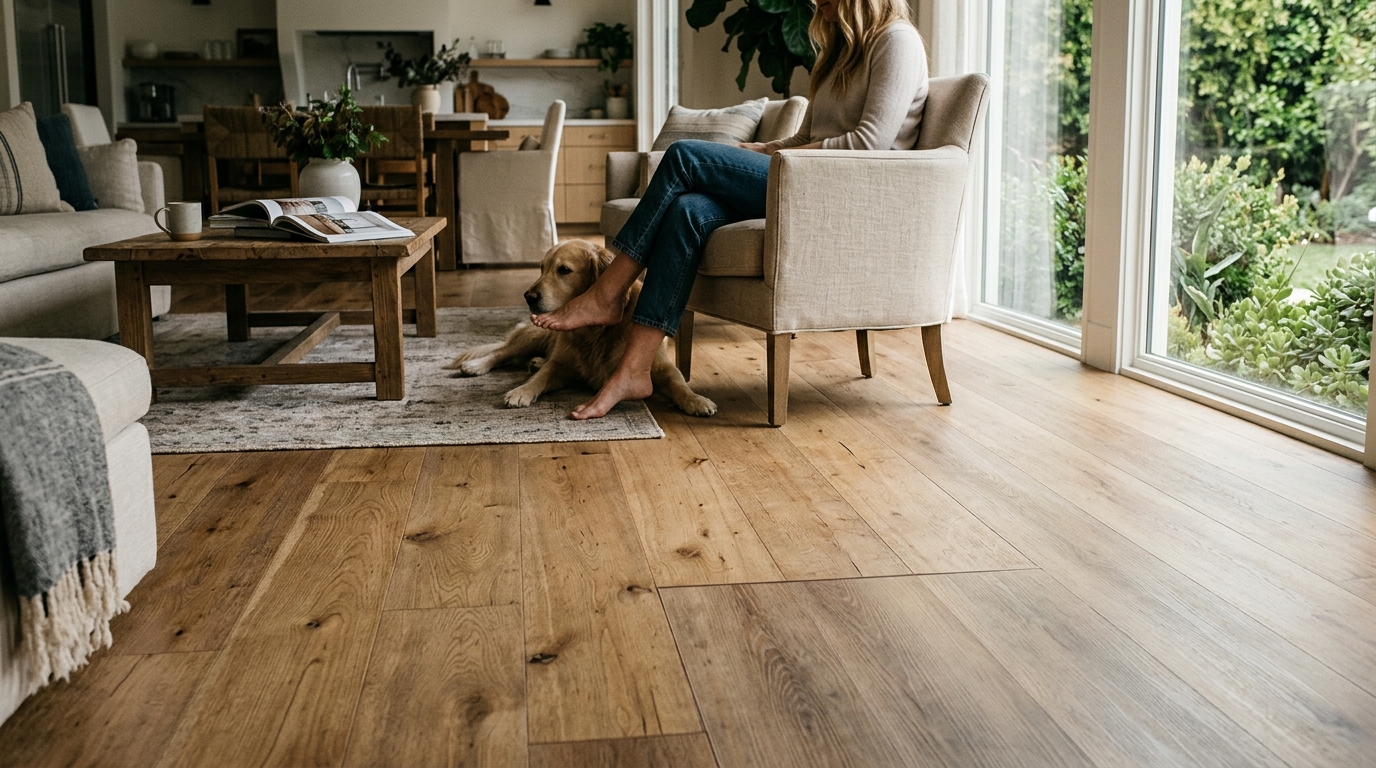
Homeowners across Orange County face a critical decision when upgrading their living spaces. Recent market analysis indicates that hardwood flooring commands approximately sixty percent of the premium residential renovation budget in Southern California. This financial commitment demands a careful evaluation of material performance, long term maintenance, and regional climate compatibility. Understanding the fundamental differences between synthetic composites and natural timber will directly impact your project timeline and overall return on investment. You must weigh aesthetic preferences against practical durability before committing to a specific installation method. (Cordon BX13929 36 HFD)
Climate Adaptation and Moisture Resistance
Southern California experiences distinct seasonal shifts that directly impact interior flooring performance. Hardwood flooring is natural timber processed through kiln drying and precision milling to achieve stable dimensional properties. This material responds to ambient humidity by expanding slightly during coastal summer months and contracting during dry inland winters. Laminate flooring is a synthetic composite engineered with high density fiberboard cores and moisture resistant surface coatings. The layered construction actively blocks water penetration, making it highly suitable for basements or ground level patios. Homeowners in humid microclimates should prioritize moisture blocking capabilities to prevent warping or delamination over time.
Material Construction and Layer Composition
The structural integrity of your chosen flooring dictates its resistance to daily wear and foot traffic. Premium hardwood options feature solid timber planks that can be refinished multiple times throughout their operational lifespan. These natural materials develop unique patinas that enhance architectural character without compromising structural integrity. Conversely, laminate flooring is a manufactured product consisting of a photographic wear layer bonded to a rigid core substrate. The photographic layer accurately replicates wood grain patterns while providing exceptional scratch resistance against pet claws and moving furniture. Selecting the appropriate core material ensures your floors maintain their original appearance for decades.
Installation Process and Subfloor Requirements
Professional installation standards vary significantly between natural timber and synthetic alternatives. Solid hardwood requires precise nail down or glue down techniques that demand specialized subfloor preparation and acclimation periods. Contractors typically allow wood planks to adjust to indoor temperature and humidity levels for seventy two hours before beginning the physical installation. Floating laminate installations utilize interlocking click lock mechanisms that rest directly above existing subfloors without adhesive interference. This method drastically reduces project duration and eliminates the need for heavy pneumatic equipment. Homeowners should verify their subfloor flatness tolerances before scheduling professional delivery.
Cost Analysis and Long Term Value
Budget allocation for flooring projects must account for both initial material costs and projected maintenance expenses. Hardwood flooring typically commands higher upfront pricing due to raw timber sourcing and specialized milling requirements. However, the ability to refinish solid wood surfaces every fifteen to twenty years extends the total lifecycle well beyond standard warranties. Laminate flooring offers immediate cost savings through mass production techniques and simplified distribution networks. The replacement cycle for damaged laminate planks often requires full section removal rather than localized repairs. Long term financial planning should weigh initial expenditure against projected refurbishment frequency.
Maintenance Protocols and Lifespan Expectations
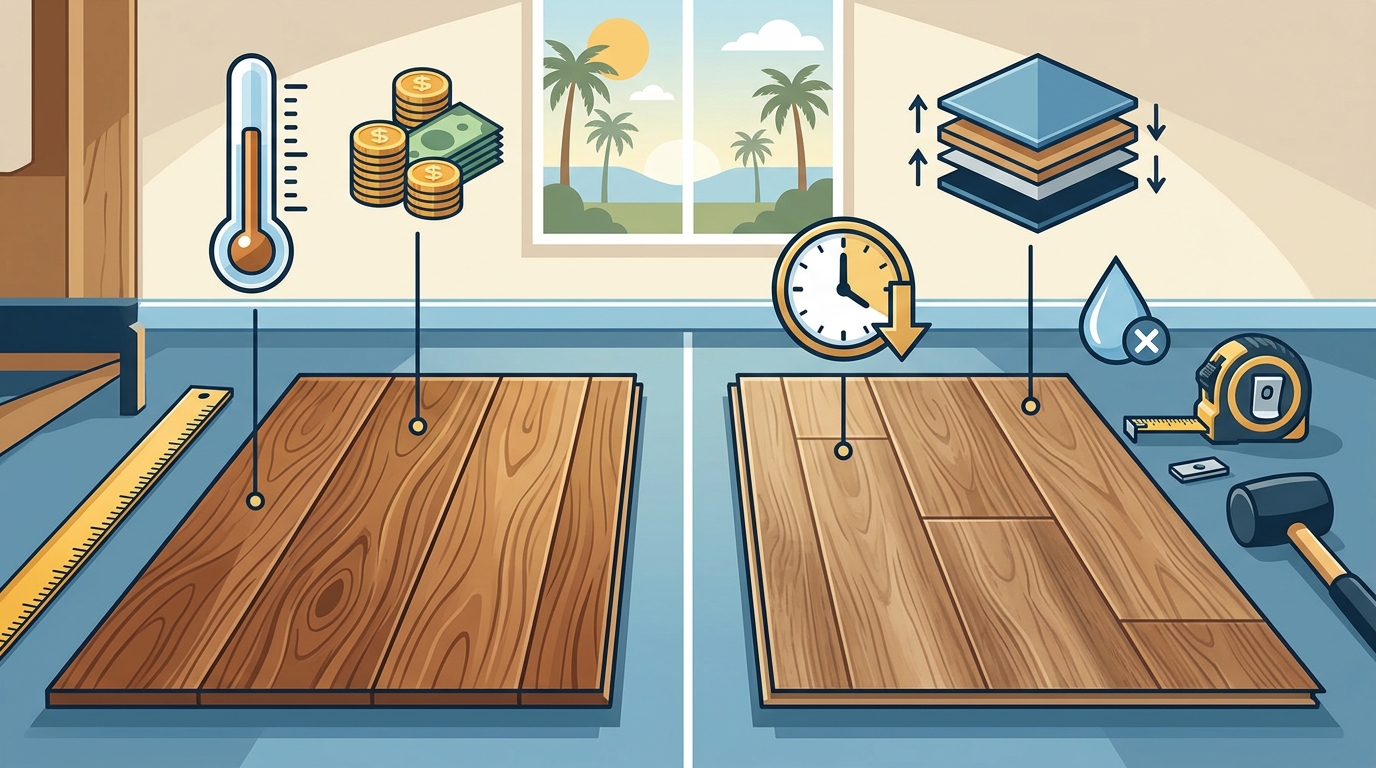
Daily care routines directly influence the longevity and visual appeal of your chosen flooring system. Hardwood flooring requires periodic application of pH neutral cleaning solutions and immediate spill mitigation to prevent surface staining. Regular dust mopping and occasional professional buffing maintain the original factory finish without compromising structural integrity. Laminate flooring demands only damp mopping with manufacturer approved cleaners to preserve the protective wear layer. Avoid excessive water exposure during cleaning routines to prevent core swelling or edge separation. Proper maintenance protocols ensure your flooring investment delivers maximum aesthetic and functional returns.
| Feature Category | Hardwood Flooring | Laminate Flooring |
|---|---|---|
| Material Composition | Natural Timber Planks | Synthetic Composite Core |
| Moisture Resistance | Low to Moderate | High |
| Refinishing Capability | Multiple Sessions | None |
| Installation Method | Nail Down or Glue Down | Floating Click Lock |
| Typical Lifespan | 30 to 50 Years | 15 to 25 Years |
Key Takeaways
- Hardwood flooring commands approximately sixty percent of premium renovation budgets in Southern California.
- Solid timber planks can be refinished multiple times, extending total lifecycle beyond standard warranties.
- Laminate flooring utilizes high density fiberboard cores with moisture resistant surface coatings.
- Floating installation methods drastically reduce project duration and eliminate pneumatic equipment needs.
- Regular pH neutral cleaning and immediate spill mitigation prevent surface staining on natural wood.
- Professional subfloor preparation and seventy two hour acclimation periods ensure optimal performance.
- Long term financial planning should weigh initial expenditure against projected refurbishment frequency.
Frequently Asked Questions
Is laminate flooring suitable for Southern California coastal climates?
Yes, laminate flooring performs exceptionally well in coastal environments due to its moisture resistant core construction and stable dimensional properties.
Can I refinish damaged hardwood flooring after years of use?
Solid hardwood surfaces can be sanded and refinished multiple times, restoring original appearance and extending total operational lifespan.
What subfloor preparation is required before installation?
Contractors typically require flat, clean, and dry subfloor surfaces with specific moisture barrier requirements depending on the chosen material.
How does laminate compare to luxury vinyl plank options?
Laminate flooring offers superior scratch resistance and rigid core stability, while luxury vinyl provides enhanced waterproof capabilities and softer underfoot comfort.
Are there specific maintenance products I should avoid?
Avoid wax based polishes and ammonia heavy cleaners that degrade factory finishes and compromise long term structural integrity.
Does hardwood flooring increase home resale value in Orange County?
Real estate market data consistently shows that natural wood flooring commands higher appraisal values and accelerates sales cycles across premium neighborhoods.
Begin Your Flooring Project Today
Transform your Southern California residence with premium materials backed by expert guidance and professional installation standards. Visit our Irvine showroom to explore extensive hardwood collections and receive personalized project consultations. Schedule your complimentary flooring assessment at Hardwood Flooring Depot Irvine and secure the perfect foundation for your next renovation milestone.