
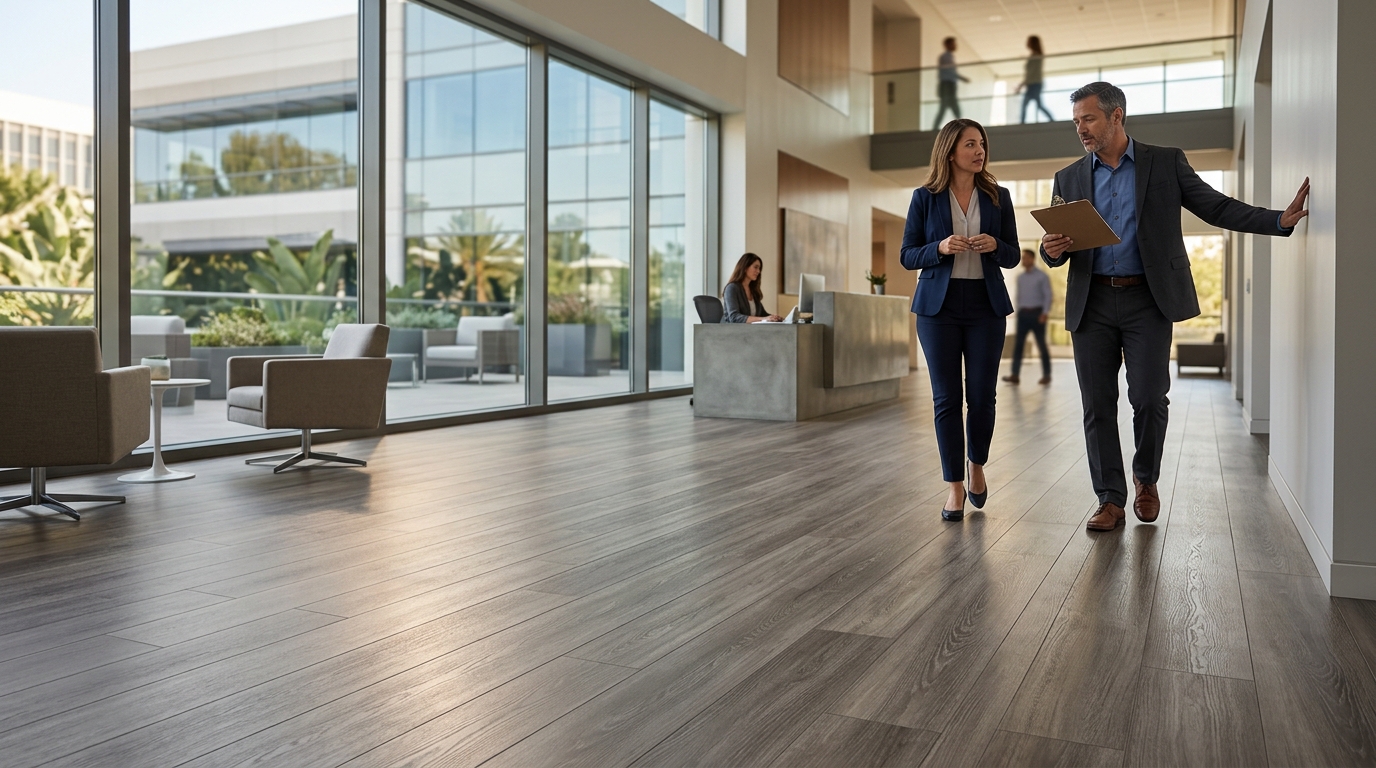
Business owners in Southern California face strict durability requirements when selecting hard surface materials for high-traffic environments. Recent industry data shows that commercial spaces experience an average of 4,000 foot traffic cycles per square foot annually. This intense usage demands specialized materials that resist wear while maintaining aesthetic appeal. Facility managers prioritize vendors who supply certified commercial-grade products. Selecting the correct brand directly impacts long-term maintenance costs and operational continuity. Foot traffic data confirms this baseline usage pattern across retail and office sectors. Facility managers prioritize vendors who supply certified commercial-grade products. GSA flooring specs outline the exact durability thresholds required for public buildings. Selecting the correct brand directly impacts long-term maintenance costs and operational continuity. Industry lifecycle reports demonstrate how material selection reduces five-year operational expenses.
SPC Commercial LVP Solutions
Core Material Composition
Stone plastic composite flooring is a rigid core composite composed of limestone powder, polyvinyl chloride, and stabilizers. The dense construction provides exceptional impact resistance against rolling carts and heavy equipment. Many Southern California businesses now specify this category for its rapid installation timelines. The rigid core prevents moisture intrusion beneath the surface layer. This characteristic makes it ideal for ground-level commercial spaces and basements.
Major manufacturers like Cali and DuChateau produce commercial-grade planks that meet heavy traffic standards. These products feature reinforced wear layers that withstand constant abrasion. Facility managers appreciate the simplified maintenance protocols required for these surfaces. Regular sweeping and damp mopping maintain the original finish for years. The material also offers superior acoustic dampening compared to traditional tile. This reduces ambient noise in open-plan offices and retail showrooms.
Hardwood Commercial Grade Options
Engineered Stability
Engineered hardwood flooring is a multi-layer panel constructed from bonded plywood and a solid wood veneer. This construction method prevents expansion and contraction caused by seasonal humidity shifts. Southern California commercial properties benefit from this dimensional stability. High-end hospitality venues and corporate lobbies frequently specify these products for their authentic grain patterns. The veneer thickness determines whether the floor can be refinished multiple times. Thicker veneers allow for three or four sanding cycles over the building lifecycle.
Brands like Anderson and Armstrong deliver commercial-rated planks with enhanced scratch resistance. These manufacturers apply aluminum oxide coatings to the factory finish. The coating creates a hardened barrier against scuff marks and heavy foot traffic. Property owners can install these systems using glue-down or floating methods. Both approaches provide long-term structural integrity. The visual warmth of natural wood continues to drive customer engagement in boutique retail settings.
Waterproof Assembly Methods
Locking Mechanism Design
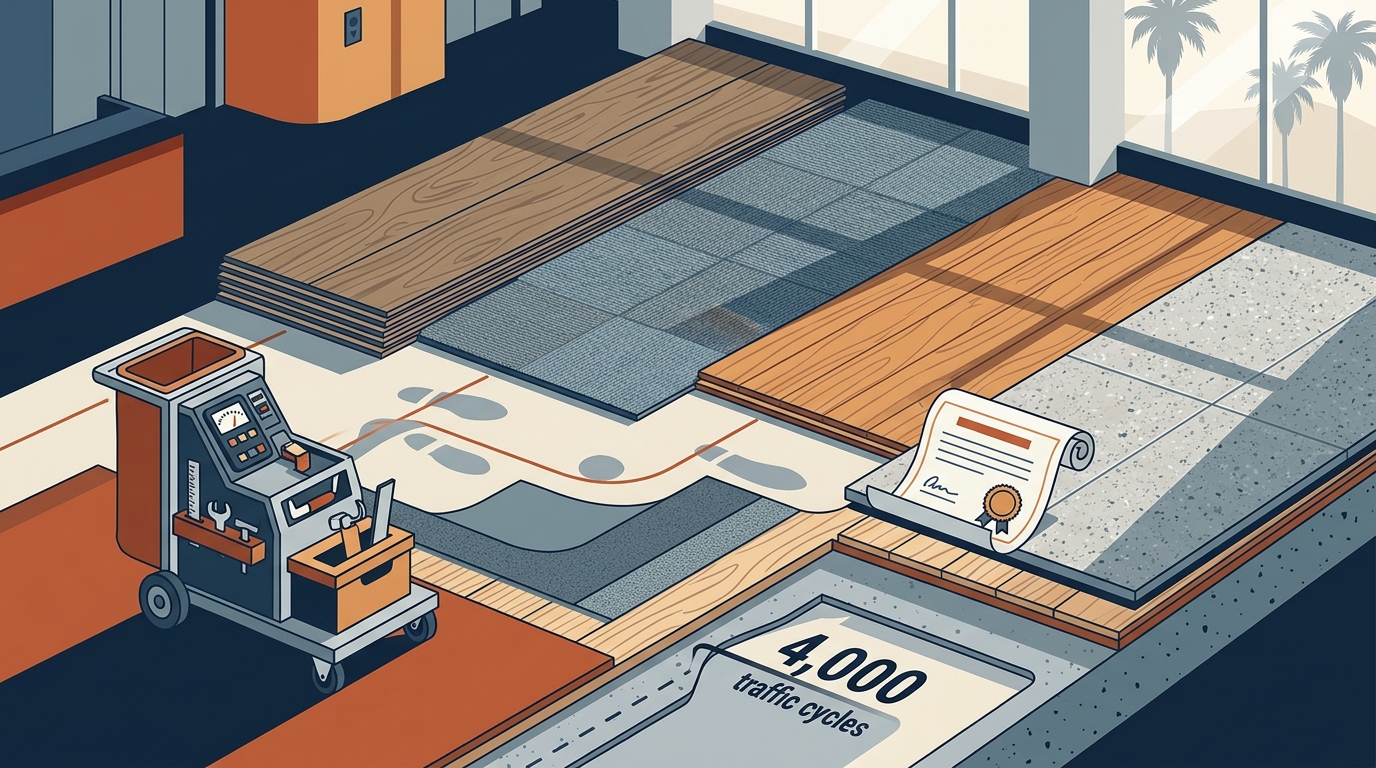
Click-lock assembly is a mechanical fastening method that creates a continuous floating floor. Commercial installers favor this approach for rapid project completion. The French Collection line demonstrates this technology through its patented locking geometry. Each plank connects to adjacent pieces using a downward angle insertion technique. This creates a unified surface that resists water penetration at the seams.
Waterproof performance remains critical for restaurants and healthcare facilities. Liquid spills cannot penetrate the rigid core to damage the subfloor. This eliminates the risk of mold growth and structural rot. Facility managers report reduced liability claims after switching to waterproof commercial systems. The seamless surface also meets ADA compliance requirements for smooth transitions. Regular inspection protocols verify that locking joints remain secure after years of use.
Accessories and Installation
Transition and Transition Components
Transition components bridge height differences between different flooring materials. These are metal or wood strips that cover expansion gaps at doorways. Commercial buildings require heavy-duty thresholds to withstand rolling luggage and equipment. Hardwood Flooring Depot Irvine supplies comprehensive accessory packages for every project. These packages include stair nosings, T-moldings, and reducer strips. Proper installation prevents tripping hazards and extends the lifespan of the primary flooring.
Adhesives and underlayments complete the commercial installation matrix. High-performance adhesives bond rigid planks to concrete subfloors without off-gassing volatile compounds. Low-VOC formulations maintain indoor air quality standards for occupied buildings. Installers verify subfloor flatness before applying any bonding agents. A perfectly level substrate prevents premature wear and audible clicking sounds. These supporting materials ensure the primary flooring performs exactly as engineered.
Selection Comparison
| Material Category | Traffic Rating | Maintenance Requirement | Best Application |
|---|---|---|---|
| SPC LVP | Heavy Commercial | Damp Mop Only | Retail and Offices |
| Engineered Hardwood | Moderate to Heavy | Periodic Refinishing | Hospitality and Lobbies |
| Waterproof LVP | Heavy Commercial | Standard Cleaning | Restaurants and Clinics |
| Commercial Carpet | Ultra Heavy | Deep Extraction | Call Centers and Hotels |
Key Takeaways
- SPC commercial flooring delivers exceptional impact resistance for high-traffic retail spaces.
- Engineered hardwood veneers thicker than 4 millimeters allow multiple refinishing cycles.
- Waterproof locking systems prevent subfloor damage from liquid spills in food service areas.
- Heavy-duty transition components eliminate tripping hazards at material junctions.
- Low-VOC adhesives maintain strict indoor air quality standards for occupied buildings.
- Proper subfloor preparation prevents premature wear and audible joint failure.
Frequently Asked Questions
Which commercial flooring brand offers the best warranty in Southern California?
Major manufacturers like Armstrong and Cali provide commercial warranties ranging from fifteen to twenty-five years. These coverage periods depend on the specific product line and installation method. Facility managers should verify warranty transferability before purchasing bulk inventory.
How long does commercial LVP installation typically take?
Professional crews complete standard commercial LVP projects within three to five business days. The timeline depends on square footage and subfloor preparation requirements. Floating installation methods accelerate project completion compared to glue-down techniques.
Can engineered hardwood withstand rolling office chairs?
Commercial-grade engineered hardwood features aluminum oxide coatings that resist chair casters. Facility managers should specify heavy-duty casters to prevent indentations. Regular floor mats at workstation entrances further protect the surface finish.
What maintenance schedule applies to waterproof commercial flooring?
Waterproof commercial flooring requires daily dry dust mopping and weekly damp mopping. Facility managers should avoid abrasive cleaners that degrade the wear layer. Periodic recoating restores the original gloss and scratch resistance.
Are commercial flooring materials compliant with ADA accessibility standards?
Most modern commercial flooring systems meet ADA slip resistance and smooth transition requirements. Installers must verify coefficient of friction ratings before final approval. Transition strips must remain flush with adjacent surfaces to prevent wheelchair obstruction.
How do I calculate the correct square footage for a commercial project?
Contractors measure room dimensions and multiply length by width to determine total area. You should add ten percent extra material to account for cutting waste and future repairs. Accurate measurements prevent costly project delays and material shortages.
Contact Experts
Southern California business owners require specialized guidance when selecting commercial flooring systems. Our team evaluates your specific traffic patterns and operational requirements to recommend optimal materials. Visit our Irvine showroom to review physical samples and technical specifications. Schedule a project consultation today to secure your preferred installation window.
Explore our complete commercial flooring catalog and request a custom project quote.
Review Mediterranean Collection samples to evaluate grain depth and finish durability. Examine French Collection LVP for waterproof locking performance. Compare Bordeaux LVP specifications against standard commercial requirements. Assess Brittany LVP dimensions for large open-plan layouts.