
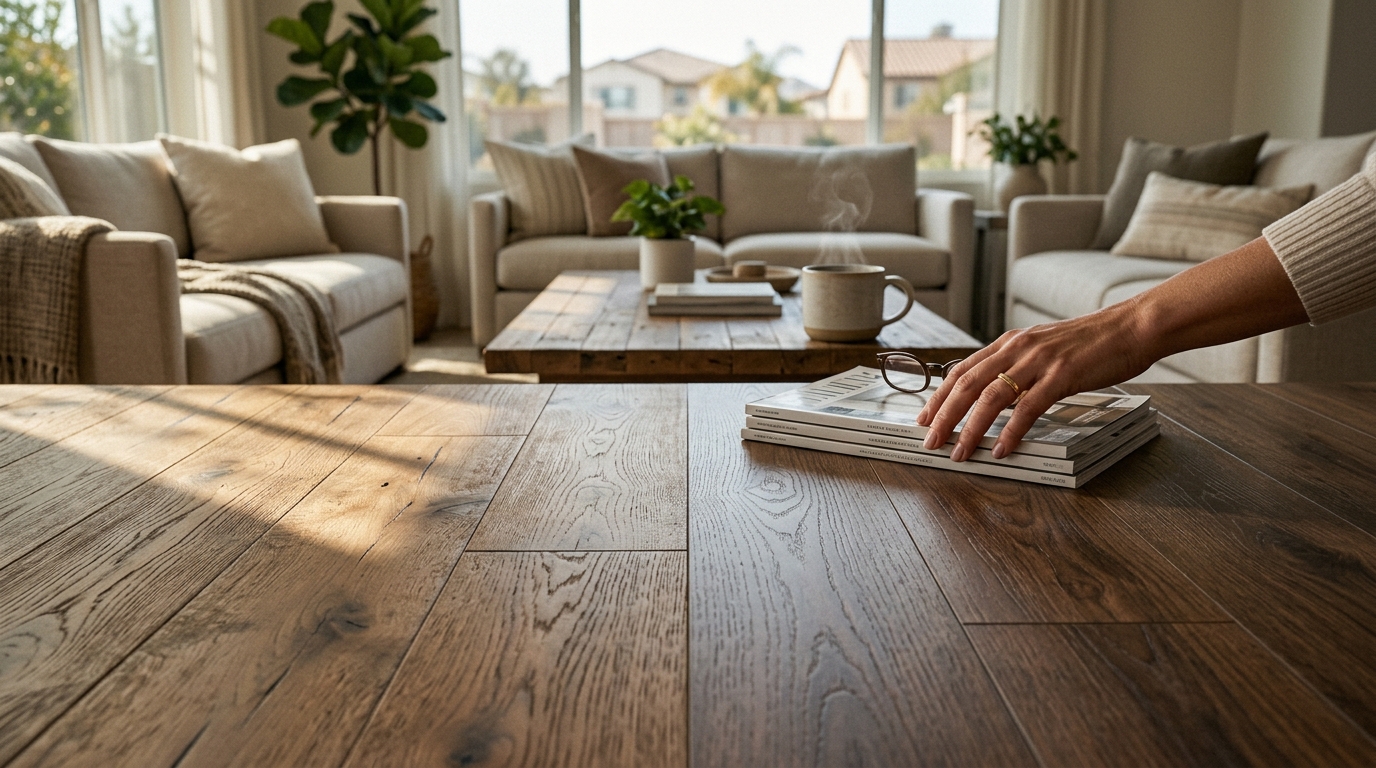
Homeowners across Orange County face a critical decision when upgrading living spaces. According to the National Association of Realtors, updated flooring increases property resale value by nearly eight percent. This financial reality demands a careful evaluation of material performance. You must weigh long-term maintenance against upfront investment. Southern California presents unique environmental challenges that directly impact material selection. Understanding these variables prevents costly installation mistakes and ensures lasting aesthetic appeal. (Cordon BX13929 36 HFD)
Understanding Core Material Composition
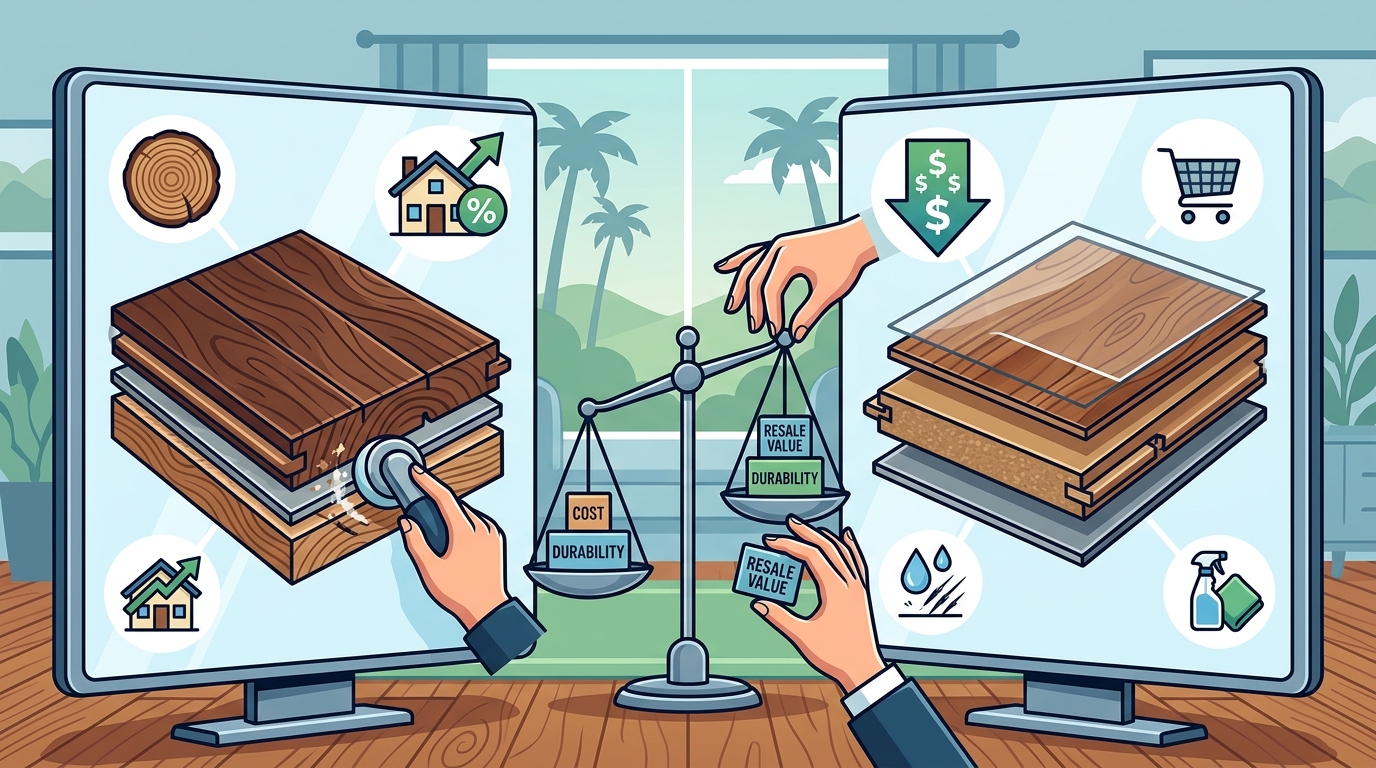
Laminate flooring is a synthetic composite engineered to mimic natural wood grain through high-resolution imaging and protective wear layers. Hardwood flooring is a solid or engineered timber product harvested directly from mature trees and milled into precise planks. Engineered hardwood is a composite panel constructed from thin wood veneers bonded together with cross-grain orientation to maximize dimensional stability. The fundamental difference lies in manufacturing processes and raw material sourcing. Laminate relies on fiberboard cores bonded with resin, while hardwood utilizes natural timber structures. This distinction dictates how each material responds to foot traffic and environmental shifts.
Manufacturers apply multiple protective coatings to laminate surfaces to resist scratches and stains. Hardwood relies on factory-applied urethane or oil-based finishes that penetrate the wood grain. Both options deliver distinct tactile experiences underfoot. Homeowners should prioritize material transparency when reviewing product specifications. Browse our hardwood collection to examine authentic timber options available for local installation.
Evaluating Durability and Moisture Resistance
Moisture exposure remains the primary failure point for residential flooring systems. According to the APA Wood Products Council, properly sealed wood maintains structural integrity for decades when installed correctly. Laminate cores absorb minimal water, making them highly resistant to spills and humidity fluctuations. Solid hardwood expands and contracts with seasonal temperature changes. This natural movement requires precise acclimation periods before installation.
Engineered hardwood offers superior dimensional stability compared to solid timber. The cross-laminated plywood base reduces warping risks in high-traffic zones. Laminate excels in basements and ground-level living areas where concrete subfloors retain ambient moisture. Neither material tolerates standing water indefinitely. Immediate cleanup protocols remain essential for both categories. Professional subfloor preparation eliminates moisture barriers and ensures long-term performance.
Analyzing Installation Requirements and Costs
Installation complexity directly influences total project budgets. Laminate utilizes floating floor systems that interlock without adhesive or nail guns. This method reduces labor hours and minimizes subfloor damage. Hardwood requires mechanical fastening or glue-down techniques that demand specialized tools and experienced craftsmen. Regional labor rates in Southern California typically range between forty and eighty dollars per square foot for professional installation. Material costs vary widely based on timber grade and plank width.
DIY enthusiasts often favor laminate due to its forgiving installation parameters. Hardwood demands precise subfloor leveling and moisture testing before commencement. Mistakes during hardwood installation frequently result in costly material replacement. Full remodel services integrate flooring installation with cabinetry and fixture upgrades. Comprehensive project management prevents scheduling conflicts and budget overruns.
Assessing Aesthetic Appeal and Long-Term Value
Aesthetic longevity determines whether a flooring investment justifies its initial price tag. Hardwood develops a natural patina that deepens in color over decades of exposure. Laminate maintains its original factory appearance without requiring refinishing cycles. Homeowners seeking timeless architectural character typically prioritize solid timber options. Modern laminate manufacturing has narrowed the visual gap through advanced embossing technologies.
Resale value calculations heavily favor genuine wood products. According to the U.S. Census Bureau, premium flooring upgrades consistently rank among the highest returning home improvement projects. Buyers perceive hardwood as a permanent architectural asset rather than a temporary surface treatment. Laminate serves well in rental properties and short-term renovation cycles. Both materials deliver distinct value propositions depending on your occupancy timeline.
Matching Flooring to Southern California Climate
Coastal humidity and inland temperature swings create distinct environmental stressors. Hardwood performs optimally in climate-controlled living spaces with consistent humidity levels between thirty-five and fifty-five percent. Laminate tolerates wider environmental fluctuations without compromising structural integrity. Inland Southern California communities experience pronounced seasonal shifts that accelerate material expansion cycles.
Proper ventilation and humidity regulation extend the lifespan of both flooring categories. Coastal properties benefit from moisture-resistant laminate in entryways and mudrooms. Hardwood installations require precise moisture barriers when placed over concrete slabs. Schedule a consultation to evaluate your specific environmental conditions. Expert guidance ensures material selection aligns with regional climate data.
Comparison Matrix Overview
| Feature Category | Laminate Flooring | Hardwood Flooring |
|---|---|---|
| Core Material | Fiberboard composite with resin binding | Solid timber or engineered plywood base |
| Moisture Resistance | High resistance to spills and humidity | Requires sealing and climate control |
| Installation Method | Floating click-lock system | Nail-down or glue-down technique |
| Refinishing Capability | Not recommended after wear layer depletion | Multiple sanding and resealing cycles |
| Typical Lifespan | Twenty to thirty years | Fifty to one hundred years |
Key Takeaways
- Laminate flooring is a synthetic composite engineered to mimic natural wood grain through high-resolution imaging and protective wear layers.
- Hardwood flooring is a solid or engineered timber product harvested directly from mature trees and milled into precise planks.
- Updated flooring increases property resale value by nearly eight percent according to industry research.
- Laminate utilizes floating floor systems that interlock without adhesive or nail guns.
- Hardwood develops a natural patina that deepens in color over decades of exposure.
- Coastal humidity and inland temperature swings create distinct environmental stressors for residential flooring.
- Professional subfloor preparation eliminates moisture barriers and ensures long-term performance.
Frequently Asked Questions
Is laminate flooring safe for homes with pets and children?
Laminate surfaces resist scratches, stains, and impact damage better than unfinished wood. The protective wear layer prevents pet claws from marring the visual finish. Spills wipe away without penetrating the fiberboard core. This durability makes laminate an excellent choice for active households.
Can hardwood flooring withstand Southern California temperature fluctuations?
Engineered hardwood offers superior dimensional stability compared to solid timber. The cross-laminated plywood base reduces warping risks in high-traffic zones. Proper acclimation periods prevent seasonal expansion issues. Climate-controlled environments maximize long-term performance.
What is the average lifespan of laminate versus hardwood?
Laminate typically lasts twenty to thirty years with normal residential use. Hardwood flooring frequently exceeds fifty years and can be refinished multiple times. Material quality and maintenance routines directly influence longevity. Both options deliver distinct value propositions depending on your occupancy timeline.
Does laminate flooring require professional installation?
Laminate utilizes floating floor systems that interlock without adhesive or nail guns. This method reduces labor hours and minimizes subfloor damage. DIY enthusiasts often favor laminate due to its forgiving installation parameters. Professional installation ensures precise seam alignment and moisture barrier placement.
How do I maintain hardwood flooring in humid coastal areas?
Regular sweeping and damp mopping preserve factory finishes without damaging the wood grain. Avoid excessive water exposure during cleaning routines. Humidity monitors help maintain optimal indoor climate conditions. Professional refinishing restores surface integrity when wear patterns become visible.
Which flooring option offers better sound insulation?
Laminate installations benefit from underlayment padding that absorbs impact noise. Hardwood requires separate acoustic barriers to reduce footfall transmission. Both materials perform adequately when paired with quality sound-dampening layers. Subfloor construction significantly influences overall acoustic performance.
Can I install either flooring type over existing tile?
Both materials require perfectly smooth and level subfloor surfaces. Existing tile must be securely bonded without loose fragments. Laminate floats above the substrate without additional fastening. Hardwood demands mechanical fastening that penetrates through underlying layers. Professional assessment determines structural compatibility before commencement.
Ready to Upgrade Your Southern California Home?
Comparing laminate and hardwood flooring requires careful evaluation of your specific environmental conditions and long-term ownership goals. Both materials deliver distinct performance characteristics that align with different project budgets. Visit our Irvine showroom to examine physical samples and discuss installation timelines. Our certified flooring specialists provide precise material recommendations tailored to your property. Schedule your consultation today and secure premium flooring solutions for your next renovation project.