
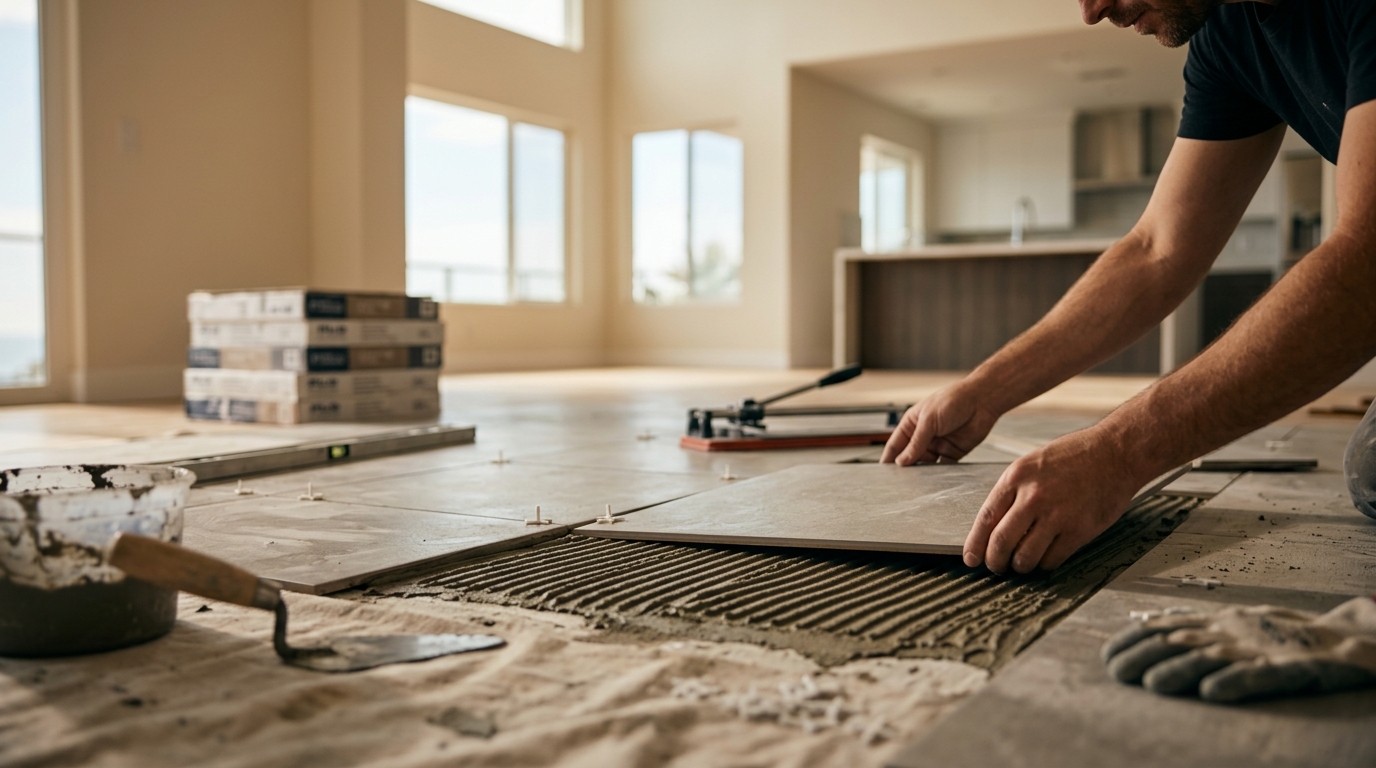
Homeowners in Orange County frequently ask whether they can handle ceramic or stone projects alone. Recent housing data indicates that roughly 35 percent of regional renovation budgets now allocate funds toward specialized labor rather than materials. This shift reflects the technical demands of modern substrates and regional humidity patterns. Understanding the exact requirements for your space will prevent costly material waste and structural failures. (Alassio Mediterranean 9 5)
Substrate Preparation
Substrate preparation is the systematic leveling and cleaning of the underlying floor before adhesive application. Contractors in Southern California prioritize this step because coastal moisture and seismic activity create unique stress points. DIY enthusiasts often skip moisture testing, which leads to premature adhesive failure. Professional crews utilize industrial-grade moisture meters to verify concrete slab conditions. This verification process typically adds two days to the project timeline but prevents irreversible damage.
Moisture Testing Protocols
Regional humidity levels consistently exceed 60 percent during summer months. According to the USGS reports, elevated groundwater tables frequently compromise unsealed concrete slabs. Professionals conduct calcium chloride tests to measure vapor emission rates. Homeowners attempting this step without calibrated equipment often misread baseline moisture thresholds. Incorrect readings directly correlate with bubbling grout and delaminating tiles.
Material Selection
Waterproof luxury vinyl flooring is a multi-layer synthetic product engineered to resist moisture penetration and impact damage. Many Southern California homeowners prefer this material for kitchens and bathrooms due to its dimensional stability. Retailers like Hardwood Flooring Depot Irvine stock extensive collections that mimic natural stone without the maintenance burden. DIY installers benefit from click-lock mechanisms that eliminate the need for heavy adhesives. Professionals still recommend perimeter expansion gaps to accommodate seasonal thermal expansion.
Comparing Regional Collections
Modern manufacturing techniques have produced highly realistic textures and beveled edges. The Mediterranean Collection features wide-plank formats that reduce grout line maintenance. The French Collection emphasizes rustic distressing and matte finishes for traditional aesthetics. Homeowners should request physical samples before committing to large square footage orders. Professional contractors maintain direct relationships with distributors to secure bulk pricing tiers.

Installation Techniques
Mortar bed installation is a traditional method where cement-based mixtures create a rigid, load-bearing foundation for heavy stone. This process requires precise trowel notching and consistent compression across the entire surface area. DIY attempts frequently result in lippage, which occurs when adjacent tiles sit at uneven heights. Professionals utilize laser levels and spacers to maintain uniform surface planes. The curing period typically requires 24 hours before foot traffic is permitted.
Adhesive Chemistry and Application
Modern thin-set mortars contain polymer additives that improve flexibility and bond strength. Regional building codes mandate specific chemical compositions for wet areas. Homeowners often confuse standard mastic with waterproof thin-set, leading to rapid degradation. Professionals select modified polymers based on substrate porosity and tile absorption rates. Proper trowel orientation ensures complete adhesive coverage beneath every tile.
Regulatory Compliance
Orange County building departments enforce strict slip-resistance ratings for commercial and residential wet areas. Recent code updates require specific COF values for bathroom flooring and entryways. DIY projects frequently overlook these metrics, resulting in failed inspections and mandatory rework. Licensed contractors track regulatory changes continuously to ensure full compliance. Unpermitted installations can void homeowner insurance coverage during water damage claims.
Permit Requirements and Inspections
Structural modifications or electrical radiant heating integration always trigger mandatory permit filings. The National Association reports that 42 percent of regional renovations require municipal approval. Professionals handle the entire documentation process, including structural engineering stamps and fire ratings. DIY homeowners must navigate complex municipal portals without technical guidance. Failed inspections typically delay project completion by three to four weeks.
Cost Analysis
Regional labor rates for certified tile installers consistently exceed 45 dollars per square foot. This pricing reflects specialized equipment, insurance coverage, and warranty obligations. DIY projects reduce direct labor costs but increase material waste and tool rental expenses. Professional crews minimize waste through precise digital layout planning. The long-term value of professional installation consistently outweighs initial savings.
Essential Tool Investment
Professional-grade wet saws, laser levels, and diamond blade cutters require substantial upfront capital. Many DIY enthusiasts rent equipment daily, which rapidly accumulates hidden costs. Professionals maintain these tools continuously, ensuring optimal cutting precision and safety. Homeowners should calculate total equipment rental against contractor quotes before proceeding. Proper safety gear remains non-negotiable during heavy material handling.
| Installation Approach | Material Waste Rate | Tool Investment | Warranty Coverage |
|---|---|---|---|
| DIY Installation | 15 to 20 percent | High rental costs | Manufacturer only |
| Professional Installation | 3 to 5 percent | Included in labor | Full system guarantee |
| Hybrid Approach | 8 to 12 percent | Moderate purchase | Partial coverage |
Key Takeaways
- Substrate preparation requires calibrated moisture meters to prevent adhesive failure in coastal climates.
- Waterproof luxury vinyl flooring eliminates heavy mortar requirements while maintaining dimensional stability.
- Orange County building codes mandate specific slip-resistance metrics for all residential wet areas.
- Professional crews utilize digital layout planning to minimize material waste below 5 percent.
- Regional labor rates consistently exceed 45 dollars per square foot to cover insurance and equipment.
- Hardwood Flooring Depot Irvine supplies extensive collections including the Mediterranean and French lines.
- Failed DIY inspections typically delay project completion by three to four weeks.
Frequently Asked Questions
Is DIY tile installation feasible for large Southern California homes?
Large residential spaces require precise expansion joint planning and consistent substrate leveling. DIY projects often struggle with maintaining uniform surface planes across multiple rooms. Professional crews utilize laser guidance systems to ensure seamless transitions between zones.
How does coastal humidity affect tile adhesive curing times?
Elevated moisture levels significantly extend polymer curing periods and compromise bond strength. Professionals adjust mixing ratios and ventilation protocols to accommodate regional weather patterns. DIY attempts frequently result in delayed drying and premature grout application.
What specific tools are required for professional-grade installation?
Industrial wet saws, laser levels, and diamond blade cutters form the core equipment inventory. Professionals maintain these tools continuously to ensure optimal cutting precision and safety. Homeowners should calculate total equipment rental against contractor quotes before proceeding.
Can I mix different tile collections during a single project?
Modern manufacturing techniques allow seamless integration across multiple product lines. The French Collection pairs effectively with wide-plank Mediterranean formats. Professionals coordinate pattern layouts to maintain visual continuity throughout the space.
Do Southern California building codes require permits for residential flooring?
Structural modifications or electrical radiant heating integration always trigger mandatory permit filings. Municipal inspectors verify slip-resistance ratings and fire compliance before final approval. DIY homeowners must navigate complex municipal portals without technical guidance.
How do professionals handle subfloor irregularities during installation?
Self-leveling compounds and cement backer boards create perfectly flat installation surfaces. Contractors assess subfloor deflection rates before selecting the appropriate reinforcement method. DIY enthusiasts often overlook critical load-bearing requirements, leading to cracked tiles.
Ready to Upgrade Your Floors?
Professional installation guarantees long-term performance, regulatory compliance, and warranty protection. Visit Hardwood Flooring Depot Irvine to explore premium collections and schedule a consultation. Our certified contractors deliver precise installations tailored to Southern California building standards.